

Private Label Hair Care Trends: Product Categories Creating Opportunities for New Brands
Private Label Hair Care Trends: Product Categories Creating Opportunities for New Brands
The hair care market continues to create opportunities for businesses that want to develop their own branded products. From everyday cleansing and conditioning to styling, texture, volume, smoothing and specialised routines, customers have more ways than ever to approach their hair care needs. For entrepreneurs, salon owners, hairstylists and established businesses, this creates an opportunity to build a private label hair care range around a specific customer, problem or product category.
Private label manufacturing makes it possible to enter the hair care market without building a manufacturing facility from the ground up. Instead, businesses can work with a manufacturer to select products, establish their branding, choose packaging and develop a collection that fits their target market.
The challenge is deciding where to start.
A new brand does not necessarily need to launch a large collection of products. In many cases, a focused range built around a clear customer need can create a stronger foundation than a catalogue filled with unrelated products.
Understanding the major product categories within hair care can therefore help entrepreneurs identify opportunities and build a more intentional private label strategy.
What Is Driving Opportunities in Private Label Hair Care?
Hair care is a broad category because customers do not all have the same routines, hair types, styling habits or expectations. One person may prioritise moisture, while another is looking for volume. One customer may want a simple shampoo and conditioner routine, while another may use several styling products every day.
This diversity creates room for brands to specialise.
Rather than trying to compete with every hair care company at once, a private label brand can focus on a particular audience or product philosophy.
For example, a business could build a collection around professional styling, everyday hair care, curl-focused routines, smoothing, volume, salon retail, men's grooming or premium hair treatments.
The opportunity is not simply to sell hair products. It is to create a product range that gives a specific customer a clear reason to choose your brand.
1. Shampoo and Conditioner Remain the Foundation of Hair Care
Shampoo and conditioner are among the most familiar products in the hair care category, making them an obvious starting point for many private label brands.
They are also products that naturally work together, which makes them useful for creating a cohesive first collection.
A brand could build its range around a specific hair care concept and introduce a shampoo and conditioner as the foundation. Additional products can then be introduced later as part of the same routine.
For example, a collection could eventually include cleansing, conditioning, treatment and styling products that work together rather than appearing as separate products.
This approach can make the customer journey easier to understand.
Why Shampoo and Conditioner Can Work Well for Private Label Brands
- They are familiar product categories.
- They naturally form a two-product routine.
- They can provide a foundation for a larger collection.
- They can be positioned around different hair care needs.
- They provide opportunities for repeat purchasing.
For a new brand, a shampoo and conditioner can therefore provide a straightforward starting point before expanding into more specialised products.
2. Styling Products Create Opportunities for Differentiation
Styling products offer a different opportunity because they allow brands to build collections around specific results and styling techniques.
The category can include products such as hairsprays, texture sprays, styling creams, mousses, gels, powders and finishing products.
A styling-focused brand can therefore position itself around the way customers actually style their hair.
A salon-inspired range, for example, could include products designed to support preparation, styling and finishing. A brand targeting consumers who enjoy creating different looks at home could build its range around texture, hold, volume and definition.
Styling products can also be particularly useful for content marketing because they are easy to demonstrate.
A short video can show the product being applied, distributed through the hair and used to create a finished look.
3. Texture Products Offer Strong Visual Branding Opportunities
Texture has become an increasingly important part of the visual language surrounding hair products.
A product does not only have to be photographed in its bottle. The formulation itself can become part of the brand's visual identity.
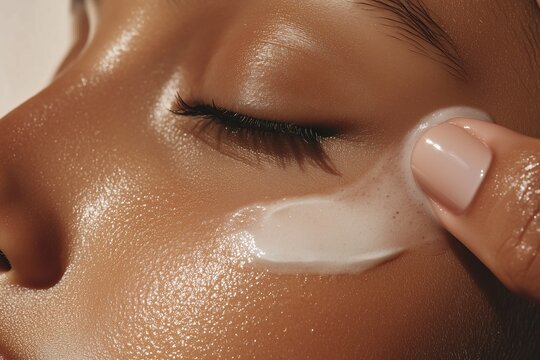
Creams, gels, powders, sprays and mousses can all be photographed or filmed in ways that communicate their physical characteristics.
A texture powder can be shown as a fine, lightweight formulation. A styling cream can be photographed as a smooth ribbon of product. A serum can be captured as glossy drops. A spray can be photographed as a fine mist.
This gives private label brands another way to create distinctive content.
Instead of relying exclusively on traditional product photography, brands can use formulation textures to create website imagery, advertisements, social content and educational demonstrations.
4. Curl-Focused Hair Care
Curl-focused hair care provides another potential direction for private label brands.
Customers with textured or curly hair often build routines around multiple stages, including cleansing, conditioning, moisture, definition and styling.
This means a brand can potentially create a collection that addresses several stages of the routine rather than relying on one standalone product.
Products such as curl creams, conditioners, leave-in products and styling products can be positioned as part of a complete routine.
The important consideration is specificity.
A brand should clearly understand who its products are designed for and what role each product plays within the customer's routine.
This can make the range easier to explain through product descriptions, tutorials and educational content.
5. Volume and Body Products
Volume is another product direction that can be used to build a focused styling collection.
Customers with fine or flat hair may look for products that support the appearance of fuller, more voluminous hair.
A volume-focused collection can include products designed for different stages of styling, such as preparation, styling and finishing.
Products such as volume sprays, mousses, texture products and finishing sprays can potentially work together as part of a collection.
From a branding perspective, volume products also lend themselves well to visual content. Movement, lift and texture can all be demonstrated through video and photography.
6. Smoothing and Frizz-Focused Products
Smoothing is another broad area within hair care that can support product development.
Customers may look for products that help create a smoother-looking finish, improve manageability or support their styling routine.
A private label brand focused on this category could develop a collection around cleansing, conditioning, leave-in care and finishing.
The branding can then reinforce the overall concept through clean photography, smooth product textures and messaging centred around the intended user experience.
This type of collection can also work particularly well for salon brands because stylists can demonstrate how the products fit into professional styling routines.
7. Leave-In Products and Treatments
Leave-in products and treatments provide another opportunity for brands looking to move beyond basic shampoo and conditioner.
These products can become part of a customer's routine between wash days or after cleansing and conditioning.
From a branding perspective, treatments can also support a more specialised positioning.
A business could build a collection around the idea of a complete hair care routine, with the treatment acting as an additional step rather than the only product.
This creates opportunities for education because customers may need guidance about when and how to use the product.
Tutorials, routine guides and professional demonstrations can therefore become important parts of the marketing strategy.
8. Hair Care for the Styling and Finishing Stage
Some brands may prefer to focus specifically on the final stages of styling.
This can include products such as hairsprays, shine sprays, texture sprays, powders and other finishing products.
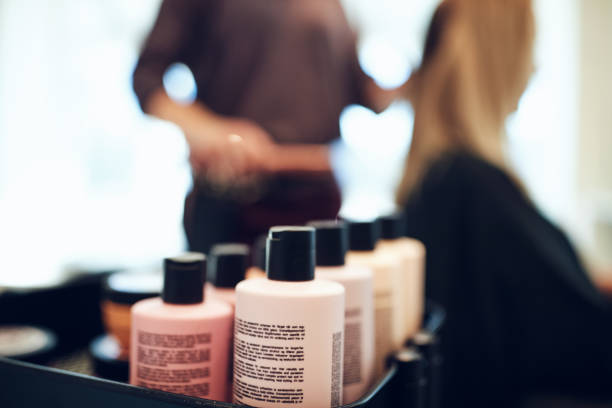
A styling-focused collection can be particularly relevant to salons, hairstylists, barbers and professional beauty businesses because these products can be demonstrated during appointments.
A salon could, for example, create a collection that helps customers recreate part of their professional styling experience at home.
The product range then becomes an extension of the service rather than a completely separate retail business.
9. Professional-Inspired Hair Care
Another opportunity for private label brands is to build their positioning around professional expertise.
Salon owners and hairstylists have direct experience working with different hair types, styling techniques and customer preferences.
That experience can become part of the brand story.
Instead of presenting the product line as simply another collection of hair care products, the business can communicate how its professional knowledge influenced the range.
This can create opportunities for educational marketing.
Stylists can demonstrate the products, explain application techniques and show how different products work within a professional routine.
10. Hair Care for Men and Grooming Brands
Men's grooming provides another potential direction for businesses considering private label hair products.
A grooming brand may want to create a smaller, highly focused collection built around cleansing, styling and finishing.
The visual identity can be developed independently from traditional salon aesthetics, depending on the intended customer.
A brand could use a minimalist, professional or more editorial approach to packaging and marketing.
The important consideration is to define the customer clearly rather than simply changing the colour of a bottle and calling the product a men's product.
Product selection, messaging, packaging and marketing should all support the intended positioning.
11. Scalp-Focused Product Opportunities
The scalp has also become an important part of conversations around hair care.
Businesses interested in scalp-focused products can consider how cleansing, treatment and routine-based products fit into the broader hair care experience.
However, brands should be careful with product claims.
Cosmetic products should be marketed with claims appropriate to their intended use and applicable requirements. Businesses should work with their manufacturer and relevant regulatory professionals when determining product claims, labels and marketing language.
A scalp-focused brand can still build strong educational content without relying on exaggerated claims.
For example, content can explain how a product is intended to be used, how it fits into a routine and what customers should expect from the product experience.
12. The Opportunity in Hair Styling Kits
Not every customer wants to purchase products individually.
A curated kit can make it easier for customers to understand how products work together.
For example, a styling collection could combine products for preparation, volume, texture and finishing.
Kits can also provide an effective way for a new brand to introduce multiple products while maintaining a clear theme.
For salons, kits can be particularly useful because stylists can recommend a complete routine instead of trying to explain several individual products separately.
The key is to make the relationship between the products obvious.
13. Why Product Ranges Should Solve a Specific Problem
One of the most important principles for developing a private label hair care range is relevance.
A product should have a reason for being in the collection.
If a brand launches shampoo, conditioner, hairspray, texture powder, serum, mousse and curl cream without explaining how these products relate to one another, customers may struggle to understand the brand's purpose.
Instead, build around a clear concept.
Perhaps the brand is focused on salon-quality styling at home. Perhaps it is built around simple everyday hair care. Perhaps it specialises in volume, curls, smoothing or professional styling.
The more clearly the range is connected, the easier it can be to market.
14. Product Aesthetics Are Becoming Part of Hair Care Marketing
Hair care is increasingly experienced visually online.
Customers encounter products through photographs, short-form videos, tutorials, creator content and ecommerce pages.
This makes product aesthetics increasingly important.
The bottle needs to look good in a photograph. The label needs to remain legible on a phone screen. The formulation can become part of texture photography. The application can become part of a demonstration video.
A private label brand should therefore think about content when developing the product itself.
Ask how the product will look on a shelf, on a website, in a video and in the hands of a customer.
15. Packaging Can Help Create a Recognisable Product Family
When several products are part of the same collection, packaging consistency becomes important.
The bottles do not necessarily have to be identical, but there should be visual relationships between them.
These relationships can come from typography, label layout, colours, finishes, bottle shapes or other design elements.
A customer should ideally be able to recognise that several products belong to the same brand before reading the name.
This is particularly important as the collection expands.
16. Start Small and Build From Customer Feedback
A private label brand does not have to launch with its final product range on day one.
Starting with a focused collection can give a business the opportunity to learn.
Which products sell first? Which products receive the most questions? Which products do customers repurchase? Which products do stylists recommend most often?
These observations can help shape future product development.
This creates a more flexible approach to building the brand.
Instead of guessing what the market wants and ordering a large collection immediately, a business can use its first launch as an opportunity to understand its customers.
17. How to Choose the Right Product Categories for Your Brand
When deciding where to focus, consider five key areas.
Your Customer
Who are you selling to? A salon client, professional stylist, consumer, barber, retailer or another business may have very different needs.
Your Expertise
What do you already understand? Your existing knowledge can give you an advantage when choosing a product category.
Your Sales Channel
Will products be sold in a salon, online, through social media, through retailers or through several channels?
Your Brand Positioning
Does your brand aim to feel professional, premium, accessible, minimalist, specialised or something else?
Your Expansion Plan
Can your first products form the foundation of a broader collection later?
Considering these five areas can help narrow down the many possibilities within private label hair care.
18. What Makes a Private Label Hair Care Product Range Strong?
A strong product range is not necessarily the one with the most products.
Instead, look for a clear connection between the products and the customer.
Each product should have a defined role. The packaging should feel consistent. The product descriptions should be clear. The brand should have a reason for existing. The products should be easy to demonstrate and explain.
The collection should also be realistic for the business to manage.
Inventory, storage, marketing, photography and customer education all become more complicated as the number of products increases.
A focused first launch can therefore be a practical way to establish the brand before expanding.
19. Choosing a Private Label Hair Care Manufacturer
Once you know what type of range you want to build, choosing the right manufacturer becomes an important step.
Look at more than the product catalogue.
Consider the manufacturer's minimum order quantities, available packaging, sampling process, production capabilities, communication, lead times, support and ability to accommodate future growth.
You should also understand exactly what is included in the manufacturing process and what responsibilities remain with your business.
A manufacturer that understands private label businesses can help make the development process more straightforward.
20. Questions to Ask Before Starting Your Private Label Hair Care Line
Before placing an order, consider asking the manufacturer:
- What hair care products are available?
- What are the minimum order quantities?
- Can I order samples?
- What packaging options are available?
- Can I use my own branding and labels?
- What information is required for artwork?
- What is the expected production process?
- What are the available product sizes?
- How are products packaged for shipping?
- Can I expand my product range later?
- What support is available for new brands?
Getting clear answers before committing to a product range can help you plan your launch more effectively.
21. How Brandology Labs Can Help You Build Your Hair Care Range
Brandology Labs provides private label manufacturing for businesses looking to create branded products across categories including hair care, cosmetics, skincare, tattoo care and pet grooming.
For entrepreneurs and businesses entering the hair care market, the private label model provides an opportunity to build a branded collection without having to establish an independent manufacturing facility.
The Brandology Labs hair care range includes products across cleansing, conditioning and styling categories, giving businesses the opportunity to build a collection around their chosen customer and positioning.
You can explore the Brandology Labs private label hair care collection to see available products and identify potential starting points for your brand.
Whether you are a salon owner, hairstylist, entrepreneur or established business expanding into hair care, the product selection should ultimately support the customer you want to serve.
22. Build the Brand Before You Build the Catalogue
It can be tempting to start private label product development by browsing a manufacturer's catalogue and choosing everything that looks interesting.
A better starting point is your brand.
What does your business stand for? Who is your customer? What problem are you trying to solve? What kind of experience do you want customers to have?
Once those questions are answered, product selection becomes easier.
You can then look for products that support the brand rather than trying to build a brand around a random collection of products.
This distinction can make a major difference in how cohesive your final range feels.
23. Your First Product Line Can Become the Foundation for Growth
A successful first collection can provide the foundation for future products.
Once customers understand your brand and begin purchasing your products, you can look for natural opportunities to expand.
A shampoo and conditioner range could eventually add treatments and styling products. A styling collection could expand into preparation and finishing products. A salon brand could introduce complementary products based on customer requests.
The expansion should make sense for the existing customer rather than simply increasing the number of products available.
This creates a more intentional approach to long-term product development.
Final Thoughts
The private label hair care market offers businesses many different directions, but the biggest opportunity may not be in trying to follow every trend at once.
Instead, focus on finding the product category that makes sense for your customer, expertise and brand.
Shampoo and conditioner can provide a strong foundation. Styling products can create differentiation. Texture products can create visual content. Curl, volume, smoothing and professional-focused products can help a brand specialise around specific needs.
The right choice depends on the business behind the brand.
Private label manufacturing makes it possible to turn that direction into a physical product collection, but the strongest brands begin with a clear understanding of who they are serving and why their products belong in that customer's routine.
Start with the customer. Identify the need. Choose a focused product range. Create a consistent visual identity. Test your products. Build your content. Then use customer feedback to decide where the brand should go next.
A successful hair care brand does not have to begin with dozens of products. It can begin with a well-considered collection and a clear reason for existing.
Ready to Build Your Private Label Hair Care Brand?
Brandology Labs helps businesses create their own branded hair care products through private label manufacturing. Explore our hair care collection to discover products that could form the foundation of your next product line.
Explore Private Label Hair Care
If you are ready to discuss your product range, contact Brandology Labs and start planning your brand.
Frequently Asked Questions
What are some popular private label hair care product categories?
Private label hair care can include categories such as shampoo, conditioner, styling creams, hairsprays, texture sprays, serums, mousses, powders, leave-in products and other hair care formulations. The best category for a brand depends on its target customer and positioning.
Is private label hair care a good option for a new brand?
Private label manufacturing can provide a way for new businesses to enter the hair care market without establishing their own manufacturing facility. A focused product range can allow a new brand to begin with a manageable collection and expand over time.
How many private label hair care products should I launch?
There is no universal number. A small collection of complementary products can be easier to launch and manage than a large catalogue. The ideal number depends on your customer, budget, sales channels and overall business strategy.
Can I create a private label hair care brand around one specific customer?
Yes. A brand can be developed around a specific customer group, such as salon clients, professional stylists, people interested in curl care, customers seeking volume-focused products or another clearly defined audience.
Can salons create their own private label hair care products?
Yes. Salons can use private label manufacturing to develop branded hair care products that can be sold in the salon, online or through other appropriate sales channels.
What should I consider when choosing a private label hair care manufacturer?
Important considerations include available products, minimum order quantities, samples, packaging options, production processes, communication, lead times, support and the manufacturer's ability to accommodate future product expansion.
Can I expand my private label hair care range later?
Yes. Many brands begin with a focused product collection and introduce additional products as they learn more about their customers. Planning a consistent brand identity from the beginning can make future expansion easier.
How important is packaging for a private label hair care brand?
Packaging is an important part of the product experience because it communicates the brand, protects the product and influences how the collection appears on shelves and online. Packaging should be both visually appropriate and practical for the product.
Read more
Salon owners, hairstylists and professional beauty businesses already have something that many new hair care brands spend years trying to build: customer trust. Every day, salon professionals recom...
The next generation of beauty brands is not competing on formula alone. Product experience, sensory branding, visual identity, discovery commerce, creator culture, personalisation, and premiumisati...