
Beauty 3.0: How Product Experience Is Redefining Private Label Beauty Brands
Beauty 3.0: How Product Experience Is Redefining Private Label Beauty Brands
The next generation of beauty brands is not competing on formula alone. Product experience, sensory branding, visual identity, discovery commerce, creator culture, personalisation, and premiumisation are becoming increasingly important parts of how customers discover, understand, and remember beauty products.
For entrepreneurs launching a private label beauty brand, this shift creates a significant opportunity. A product does not exist in isolation. The formula, texture, packaging, naming, photography, website, social media content, customer education, and unboxing experience can all become part of the same brand ecosystem.
This is the idea behind what can be described as Beauty 3.0: moving from simply selling a product to creating a complete product experience around it.
For private label businesses, this does not necessarily mean developing hundreds of products or creating complicated technology. It means being more intentional about how every customer touchpoint works together.
The modern beauty product is more than its formula. Customers experience the product through its appearance, texture, packaging, messaging, content, application, and the role it plays in their routine.
What Does Beauty 3.0 Mean?
Beauty has gone through several major shifts in the way products are developed and marketed.
Traditional beauty marketing often focused heavily on product function, ingredients, brand heritage, and broad consumer demographics.
Digital beauty introduced a new layer. Social media, influencers, online reviews, direct-to-consumer websites, tutorials, and creator content changed how products were discovered.
Beauty 3.0 represents another evolution: the growing importance of the entire product experience.
The customer may first discover a product through a short-form video. They may then visit the brand's website, look at product photography, read reviews, watch a demonstration, examine the packaging, purchase the product, experience the texture, and eventually share their own content.
Every step becomes part of the brand.
The Product Experience Starts Before the Purchase
One of the biggest changes in beauty is that the customer experience now begins before the customer physically receives the product.
A product can be experienced digitally through:
- Photography
- Video
- Product demonstrations
- Ingredient storytelling
- Texture content
- Creator reviews
- Educational content
- Customer testimonials
- Website design
- Social media
This means private label brands need to think beyond the physical bottle, jar, tube, or container.
The digital presentation of the product can influence whether someone stops scrolling, clicks through to the website, understands the product, and ultimately decides to purchase.
1. Sensory Branding Is Becoming a Competitive Asset
The term sensory branding describes how brands use sensory characteristics to create a recognisable and memorable experience.
In beauty, this can involve texture, fragrance, visual appearance, application, finish, packaging materials, and even the sound or movement associated with using a product.
Consider a styling cream.
The customer does not simply experience whether the product performs its intended function. They also experience how easily it spreads, how it feels between the fingers, how it looks in the packaging, how it applies to the hair, and what finish it leaves behind.
These details contribute to the perceived identity of the product.
For a private label brand, sensory characteristics can therefore become part of the positioning strategy.
2. Texture Can Become Part of the Brand Identity
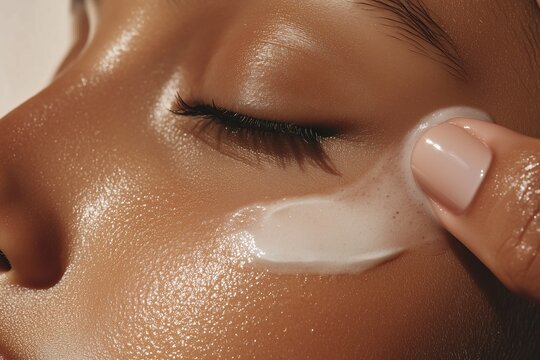
Texture is particularly interesting because it can exist simultaneously as a functional characteristic and a visual marketing asset.
A rich cream can communicate a different product experience from a lightweight gel. A glossy serum creates a different visual impression from a dry-touch oil. A whipped mousse looks and behaves differently from a dense styling cream.
This gives brands an opportunity to develop what could be called a texture language.
A collection might consistently feature:
- Rich creams
- Glossy gels
- Lightweight serums
- Whipped mousses
- Fine sprays
- Silky oils
- Soft powders
The texture becomes part of the customer experience and part of the content strategy.
Macro photography can show it. Video can demonstrate it. Product descriptions can explain it. Packaging can visually communicate it.
This creates multiple opportunities to make the product more tangible online.
3. Experiential Beauty Is About More Than Packaging
When brands talk about creating an experience, packaging is often the first thing that comes to mind.
Packaging is important, but experiential branding goes further.
The experience can include:
- How the product looks on a shelf
- How it feels when held
- How easily it dispenses
- How the formula feels during use
- How the fragrance develops
- How the product performs
- How the customer understands the routine
- How the product photographs
- How the customer feels about displaying it
A strong product experience connects these elements rather than treating them as separate decisions.
4. Packaging Is Becoming a Brand Interface
A useful way to think about packaging is as a brand interface.
The packaging communicates information, guides the customer, establishes hierarchy, and creates visual recognition.
Typography tells the customer what the product is. Product names communicate positioning. Colours can differentiate product families. Labels communicate key information. The physical format influences how the product is used.
This means packaging should not be designed at the very end of the process.
It should be considered alongside product selection and brand strategy.
Packaging question to ask: If your products were photographed without their website or social media context, would the packaging still communicate that they belong to the same brand?
5. Discovery Commerce Is Changing Product Marketing
Another major industry phrase is discovery commerce.
Traditional commerce often begins with a customer searching for something they already know they want.
Discovery commerce works differently. The customer encounters a product while consuming content and becomes interested in it.
This is particularly relevant to beauty because the category is highly visual.
A person may not be searching for a particular styling spray when they see a creator demonstrating one. A texture shot may introduce them to a new type of product. A routine video may reveal a product category they had never considered.
For private label brands, this means content and product strategy increasingly overlap.
6. Social-First Product Design
The phrase social-first is often associated with content strategy, but it can also influence product development.
A social-first product is not necessarily a novelty product designed solely to go viral. It is a product that is easy to understand and demonstrate visually.
Consider a product that has:
- A distinctive texture
- A recognisable package
- A satisfying application
- A visible finish
- A clear before-and-after use case
- An easy-to-explain benefit
These characteristics can make the product easier to demonstrate through short-form content.
That can create more opportunities for organic discovery, creator content, tutorials, and product education.
7. Creator-Led Product Discovery
Creators have become an important part of how beauty products are introduced to audiences.
A creator can demonstrate how a product works in a way that a traditional product photograph cannot.
For private label brands, this creates opportunities to design products that are easy to incorporate into tutorials, routines, demonstrations, reviews, and educational content.
A hair care product, for example, can be demonstrated during a styling routine. A cosmetic product can be incorporated into a makeup look. A grooming product can be shown during a professional grooming process.
The content becomes an extension of the product.
8. Personalisation Is Moving Beyond Custom Products
Personalisation is another major industry concept, but it does not always mean creating a unique formula for every customer.
For a private label brand, personalisation can happen through how products are organised and recommended.
A brand might create different routines for different customer needs.
For example:
- Fine hair routine
- Curly hair routine
- Volume routine
- Smoothing routine
- Styling routine
- Repair-focused routine
The same product collection can therefore become more personalised through education and product architecture.
This can make a relatively focused catalogue feel more relevant to different customers.
9. Routine-Based Selling Is Replacing Product-Only Thinking
Another important shift is from product selling toward routine selling.
Instead of presenting five products as unrelated items, brands can show customers how the products work together.
This can increase product understanding and create natural opportunities for cross-selling.
For a hair care brand, a routine might look like:
- Cleanse
- Condition
- Treat
- Style
- Finish
The customer is no longer choosing between five individual products. They are choosing whether the complete routine fits their needs.
10. Premiumisation Is Becoming More Experiential
Premiumisation is often associated with higher pricing, but premium perception is influenced by many different details.
A product can feel premium because the entire experience is coherent.
This can include:
- Refined packaging
- High-quality product photography
- Distinctive textures
- Clear product naming
- Consistent typography
- Strong website design
- Detailed product education
- Thoughtful unboxing
- Consistent customer communication
The important principle is consistency.
A premium-looking bottle cannot carry the entire brand if the website, photography, messaging, and customer experience feel disconnected.
11. Brand Consistency Is Becoming a Growth Tool
In a crowded digital environment, recognition matters.
Customers may encounter your brand on Instagram one day, a search result another day, and a product page several days later.
If each touchpoint looks completely different, the customer may not immediately recognise that they are interacting with the same business.
This is why brand consistency is more than an aesthetic exercise.
It can help create recognition across multiple customer touchpoints.
A consistent brand system should consider:
- Typography
- Colour
- Photography
- Product naming
- Packaging
- Website design
- Social media templates
- Product descriptions
- Brand voice
12. The Rise of the Brand World
The term brand world describes the larger environment created around a brand.
A product does not need to communicate everything by itself.
The website, photography, packaging, social media, campaign imagery, content, and product experience can work together to create a recognisable world.
For an emerging private label brand, this can be an effective way to create a strong identity without requiring a huge catalogue.
Five well-presented products can feel like a complete brand world when they share a clear visual and strategic language.
13. Product Storytelling Is Becoming More Important
Consumers increasingly encounter product stories before they encounter the product itself.
A product page can explain why the formula exists. A social video can demonstrate how it is used. A close-up photograph can show its texture. Packaging can communicate the ingredient story.
This creates multiple layers of product storytelling.
For a private label brand, every product should ideally have an answer to three basic questions:
- What is it?
- Who is it for?
- Why does it belong in this brand?
The clearer those answers are, the easier it becomes to create content around the product.
14. Ingredient Storytelling Can Create More Depth
Ingredients can provide another layer of storytelling.
Instead of simply listing ingredients on a label, a brand can educate customers about selected ingredients and explain their role in the overall product concept.
This can become a content strategy across:
- Blog articles
- Social media
- Product pages
- Email marketing
- Packaging
- Ingredient photography
Ingredient storytelling should always remain accurate and appropriate to the actual formula. The objective is to improve understanding, not make unsupported claims.
15. Visual Commerce Is Becoming More Important
Beauty is inherently visual, making visual commerce particularly relevant.
The customer wants to see what the product looks like, how large the packaging is, what the texture looks like, how it is applied, and what the finished result looks like.
For private label businesses, this means product photography should be considered part of the product strategy.
A strong image library might include:
- Clean product photography
- Texture close-ups
- Ingredient imagery
- Application photography
- Lifestyle photography
- Routine demonstrations
- Packaging details
- Collection photography
The more visually complete the product story, the easier it can be for customers to understand the product online.
16. Aesthetic Cohesion Matters Across the Collection
A private label product range should ideally feel like a collection rather than a group of unrelated products.
This is where collection architecture becomes useful.
Products can share:
- Typography
- Label structure
- Colour logic
- Packaging formats
- Photography style
- Naming conventions
At the same time, individual products can have enough differentiation for customers to understand their purpose.
This balance between consistency and differentiation is central to strong product architecture.
17. The Rise of Niche Beauty
Large beauty companies often operate across multiple categories and customer segments. Smaller private label brands have a different opportunity.
They can build around a very specific niche.
Examples could include:
- Professional hair styling
- Curly hair care
- Minimalist body care
- Professional grooming
- Tattoo aftercare
- Salon-inspired hair care
- Pet grooming
- Ingredient-focused skincare
Niche positioning can make it easier to create a clear brand message because the customer and product purpose are already more defined.
18. Category Expansion Should Feel Natural
As brands grow, category expansion becomes tempting.
A hair care brand may want to launch body care. A cosmetics brand may want to launch skincare. A grooming brand may want to add body products.
Expansion can make sense when it follows the customer's relationship with the brand.
The question should not simply be, "What else can we sell?"
A more useful question is:
"What else does our customer naturally expect from us?"
That distinction can prevent a brand from expanding into unrelated categories simply because the products are available.
19. Private Label Gives Brands More Room to Focus on Experience
One of the strategic advantages of private label manufacturing is that it can allow entrepreneurs to focus their attention on the customer-facing side of the business.
Instead of building an entire manufacturing operation, the entrepreneur can focus on:
- Brand positioning
- Product selection
- Packaging
- Marketing
- Content
- Community
- Retail strategy
- Customer experience
The manufacturer remains an important part of the supply chain, but the entrepreneur can concentrate on building the brand that customers actually see.
20. From Formula to Ecosystem
The most important shift may be moving from thinking about a product as a formula to thinking about it as part of an ecosystem.
The formula creates the functional experience.
The packaging creates the physical experience.
The website creates the digital experience.
Content creates the educational experience.
Social media creates the discovery experience.
The routine creates the usage experience.
Customer service creates the relationship experience.
Together, these elements create the brand.
A modern beauty brand is an ecosystem of experiences, not simply a collection of products.
How to Apply Beauty 3.0 to a New Private Label Brand
If you are developing a new private label brand, you do not need to implement every trend at once.
Instead, begin with the fundamentals.
1. Define Your Customer
Know who your products are designed for and what they are trying to achieve.
2. Choose a Focused Product Concept
Build a collection around a clear need, routine, category, or aesthetic.
3. Select Your Hero Product
Identify the product that best communicates what your brand represents.
4. Develop a Sensory Direction
Think about textures, finishes, fragrance, application, and the overall experience you want customers to associate with the products.
5. Create a Visual System
Make sure packaging, photography, website design, typography, and social content feel connected.
6. Build a Content Ecosystem
Plan how the product can be demonstrated, explained, photographed, reviewed, and incorporated into routines.
7. Create Natural Expansion Paths
Think about which products could logically follow your initial launch as your customer base develops.
How Brandology Labs Can Help Build Your Product Experience
At Brandology Labs, we help businesses develop their own branded products across a range of beauty, personal care, and grooming categories.
Our private label manufacturing approach can give entrepreneurs a starting point for building a product collection around their own brand identity, target customer, and market strategy.
Our product categories include hair care, cosmetics, skincare, tattoo care, body care, and pet grooming.
If you are developing a hair-focused brand, explore our private label hair care products for products that can form part of cleansing, conditioning, styling, treatment, and finishing routines.
For entrepreneurs creating a beauty brand, our private label cosmetics collection can provide potential products around which to build your brand concept.
For businesses entering the grooming category, explore our private label pet care products and consider how products can be organised into a complete grooming experience.
For businesses looking for a more customised approach, Brandology Labs can also support conversations around formulation and manufacturing requirements.
The Next Generation of Beauty Brands Will Sell Experiences
The beauty industry is becoming increasingly crowded, but that does not mean there are fewer opportunities for new brands.
It means brands need to be more intentional.
The opportunity is no longer limited to creating a good formula and putting a logo on a bottle.
A modern private label brand can build an entire ecosystem around its products.
It can create a recognisable sensory language. It can use texture as content. It can turn products into routines. It can use creators to demonstrate the experience. It can build a strong visual world around the collection.
It can make discovery part of the strategy.
And it can use private label manufacturing as a foundation while investing heavily in the parts of the business customers actually experience.
That is the opportunity behind Beauty 3.0.
The future of private label beauty is not simply about what is inside the bottle. It is about everything the customer experiences before, during, and after they use it.
Build a Beauty Brand Around the Complete Experience
Ready to turn your product concept into your own branded collection? Explore Brandology Labs and discover private label products across beauty, hair care, skincare, body care, tattoo care, and pet grooming.
Frequently Asked Questions
What does Beauty 3.0 mean?
Beauty 3.0 describes a broader approach to beauty branding where the product experience extends beyond the formula to include sensory characteristics, packaging, digital discovery, content, routines, customer education, and the overall brand ecosystem.
What is sensory branding in beauty?
Sensory branding uses characteristics such as texture, fragrance, appearance, application, finish, and packaging to create a recognisable and memorable product experience.
What is discovery commerce?
Discovery commerce describes situations where consumers discover products through content, social media, creators, recommendations, or other digital experiences rather than beginning with a specific product search.
Why is product texture important for beauty brands?
Texture influences how a product feels and performs, but it can also become part of the visual identity and content strategy of a beauty brand through photography, video, demonstrations, and sensory storytelling.
What is a hero product?
A hero product is a product that strongly represents a brand and can serve as an important entry point for customers. Supporting products can then be developed around the hero product and its customer need.
How can private label brands create a premium experience?
Private label brands can build premium experiences through cohesive packaging, distinctive product textures, strong photography, thoughtful naming, consistent branding, detailed product education, and a polished customer journey.
Can a small private label brand create a strong brand experience?
Yes. A brand does not necessarily need a large product catalogue to create a strong experience. A focused collection with consistent product architecture, packaging, content, and positioning can create a cohesive brand world.
What categories does Brandology Labs offer for private label manufacturing?
Brandology Labs works across categories including hair care, cosmetics, skincare, tattoo care, body care, and pet grooming, allowing businesses to develop focused collections and explore category expansion as their brands grow.
Read more

The hair care market continues to create opportunities for businesses that want to develop their own branded products. From everyday cleansing and conditioning to styling, texture, volume, smoothin...

The beauty industry is moving beyond traditional product categories. Today’s emerging brands are building around skinification, sensoriality, multifunctionality, ingredient-led positioning, premium...