
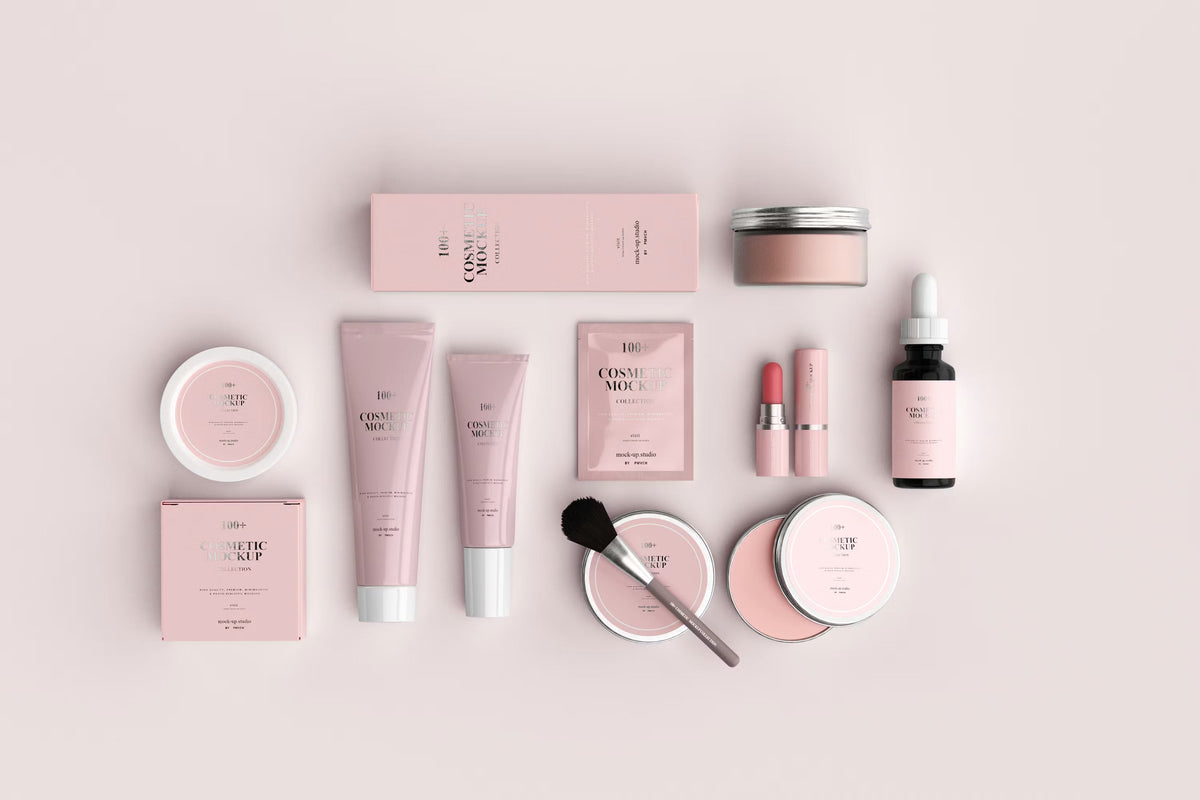
Private Label Beauty Packaging: How to Choose the Right Packaging for Your Brand
Private Label Beauty Packaging: How to Choose the Right Packaging for Your Brand
Packaging is one of the first things customers notice about a beauty product. Before they experience the formula, smell the fragrance or feel the texture, they see the container, label, colors and overall presentation. For a private label beauty brand, choosing the right packaging is an opportunity to communicate quality, establish a recognizable identity and create a product that feels right for its target customer.
However, packaging involves more than choosing an attractive bottle or jar. The right packaging must work with the formula, suit the product category, support your brand positioning and make commercial sense. It should also be practical to manufacture, fill, store, ship and use.
Whether you are launching a hair care collection, skincare range, cosmetics line, tattoo aftercare products or pet grooming products, your packaging decisions can influence both the customer experience and the long-term potential of your business.
This guide explains how to choose private label beauty packaging, compare common packaging formats, balance appearance with functionality, plan your budget and create a cohesive product range that customers can recognize.
1. Understand What Your Packaging Needs to Achieve
Before choosing a bottle, tube, jar or pump, establish what the packaging needs to do for your product and your brand.
Packaging has several roles. It protects and contains the product, helps customers dispense and use it, communicates essential information and creates a visual impression of the brand.
The priorities will differ depending on the product. A shampoo used in the shower has different practical requirements from a facial serum, a styling powder or a paw balm.
Start by asking yourself:
- Who is the intended customer?
- Where and how will the product be used?
- What is the formula's consistency?
- How much product should each package hold?
- Does the formula require a particular type of dispensing system?
- Will the product be sold online, in salons, in retail stores or through several channels?
- What price point and brand positioning are you aiming for?
- How will the package look alongside the other products in your range?
Answering these questions before selecting packaging helps you avoid making decisions based entirely on appearance.
Key principle: The best packaging is not necessarily the most expensive or elaborate option. It is the option that combines suitable product protection, ease of use, brand identity and commercially practical costs.
2. Match the Packaging to the Product Formula
The formula should be one of the first considerations when selecting packaging. Different products have different viscosities, dispensing needs and compatibility requirements.
Shampoos and Conditioners
Shampoo and conditioner are often packaged in bottles with flip-top caps, disc-top closures or pumps. The best option depends on the formula's consistency, the intended bottle size and how customers will use the product.
For salon brands, larger bottles may suit professional use, while smaller formats can be practical for retail customers, travel or introductory kits.
Consider whether customers will be using the product with wet hands, keeping it in the shower or dispensing it repeatedly throughout the week.
Lotions and Body Creams
Body lotions may work well in bottles with pumps, while thicker body creams can be suitable for jars, tubes or pumps designed to handle more viscous formulas.
The packaging should allow customers to dispense the product without unnecessary difficulty. If a formula is thick, the dispensing system needs to be suitable for that consistency.
Serums and Facial Products
Serums and other targeted facial products may use dropper bottles, treatment pumps or specialized containers. The appropriate choice depends on the formula, the intended dose and any protection requirements identified during product development.
Do not assume that a dropper or an opaque container automatically makes a product more effective. Packaging compatibility and product stability should be assessed for the actual formula.
Styling Products
Hair styling products can require a wider variety of packaging formats. Creams may be packaged in tubes or jars, powders may require suitable sifting or dispensing systems, and sprays need a compatible spray mechanism.
A fine-mist product should be tested with the intended actuator to confirm that it dispenses appropriately. The product's viscosity and formulation can affect the performance of the dispensing system.
Pet Grooming Products
Pet grooming products may include shampoos, conditioners, detangling sprays, deodorizing products and paw balms. Each format has different handling and dispensing requirements.
For sprays, consider ease of application and control. For balms, consider how customers will access the product and apply it without creating unnecessary mess.
Explore the Brandology Labs pet care collection when considering products for a private label grooming range.
3. Compare Common Packaging Types
Once you understand the product requirements, compare packaging formats that could work for the formula.
Bottles
Bottles are versatile and can be used for many liquid products. They come in different sizes, shapes, materials, colors and closure styles.
Their flexibility makes them useful for building a coordinated product range. Several products can share a similar bottle shape while using different sizes, labels or dispensing systems.
Tubes
Tubes can be practical for creams, cleansers, lotions and other products that customers dispense by squeezing the container. They are often convenient to store and carry.
When selecting a tube, consider the opening, closure, material compatibility and the amount of product customers can reasonably dispense.
Jars
Jars are commonly associated with thicker creams, masks, balms and other products that customers scoop or access directly.
They can provide a broad label area and a substantial visual presence. However, the opening should be appropriate for the product, and the packaging should be evaluated for hygiene, compatibility and ease of use.
Pumps
Pumps can offer convenient dispensing and help customers control the amount used. They can also contribute to a polished appearance.
Not every pump is suitable for every formula. Viscosity, dispensing performance, compatibility and the amount delivered per pump should be considered during testing.
Spray Bottles
Spray packaging is useful for products such as detanglers, shine sprays and some leave-in treatments. The actuator can influence the application experience, including the spray pattern and droplet size.
The finished formula and packaging should be tested together to confirm consistent performance.
Aerosol Packaging
Aerosol products require specialized packaging and manufacturing considerations. The container, valve, actuator and formula must be compatible with the intended product.
Aerosols can be suitable for some styling and personal care products, but their development and handling requirements differ from those of conventional bottles.
4. Choose Packaging That Reflects Your Brand Positioning
Your packaging should communicate the kind of brand you want customers to experience.
A minimalist brand may use simple shapes, restrained colors, clear typography and uncluttered labels. A vibrant brand may use brighter colors and more expressive graphic elements. A professional salon brand may prioritize clarity, function and a consistent appearance across its product range.
There is no single visual style that works for every beauty brand. The right choice depends on the audience and the position you want the brand to occupy in the market.
Premium Positioning
Premium packaging often uses a carefully controlled color palette, considered typography and consistent proportions. The objective is not simply to add expensive details. It is to create a coherent presentation that feels intentional.
A restrained label on a well-selected bottle can look more refined than a package overloaded with decorative elements.
Professional Positioning
Professional hair care, salon products and treatment-focused ranges may benefit from clear product names, easily identifiable categories and packaging that works well in a busy environment.
Customers should be able to distinguish shampoo from conditioner, or a finishing spray from a leave-in treatment, without struggling to read the label.
Natural-Inspired Positioning
Brands that emphasize botanical ingredients or nature-inspired concepts may choose earthy colors, simple typography and understated graphics.
However, visual choices should not imply product certifications, organic status or environmental benefits that the product does not substantiate.
5. Build a Consistent Packaging System
A product range should feel like a family rather than a collection of unrelated items.
Customers may encounter your products separately across social media, online stores, salons and retail shelves. A consistent packaging system makes it easier for them to recognize that the products belong to the same brand.
Consistency does not mean every product must use exactly the same bottle. Instead, establish visual elements that connect the range.
These elements might include:
- A consistent logo placement
- A defined typography system
- A coordinated color palette
- Consistent product naming
- Similar label layouts
- Related bottle or container shapes
- A consistent approach to ingredient highlights
- Clear distinctions between product categories
For example, a hair care range might use a shared label layout across shampoo, conditioner and styling products. Different accent colors could identify each product while maintaining a recognizable overall design.
This approach can help the collection look cohesive in product photography and on a website.
6. Select the Right Packaging Size
Packaging size affects more than how much product the customer receives. It can influence the price, perceived value, shipping cost, customer usage habits and the way the product fits into a routine.
Start with the intended use case.
A product designed for frequent salon use may require a larger format than one designed for occasional personal use. A concentrated product may need less volume per application than a product used generously.
Consider whether your range needs:
- A smaller introductory size
- A standard retail size
- A larger professional size
- A bundle or kit configuration
Offering several sizes can help a brand serve different customers, but it also adds complexity. Each size may require different packaging components, product labels, inventory and pricing calculations.
For a new brand, beginning with a focused selection can make inventory management more manageable. Expand the size range when there is a clear customer or commercial reason to do so.
7. Understand the Difference Between Standard and Custom Packaging
Private label packaging can range from standard containers with your branding to more customized packaging solutions.
Standard Packaging
Standard packaging uses existing container formats and commonly available components. Your brand identity is then applied through labels, artwork, color choices where available and other permitted customization options.
This can be a practical starting point because it allows you to focus on the product, branding and customer experience without necessarily developing a unique container from scratch.
Custom Packaging
Custom packaging may involve specialized shapes, custom molds, unique finishes, printed components or other tailored details.
These options can help create a distinctive brand identity, but they may introduce additional development costs, minimum quantities, longer lead times and more complex production requirements.
Before committing to custom packaging, consider whether the benefit is meaningful to your target customer and whether the investment fits your launch budget.
Practical approach: Start with packaging that supports your brand identity and product requirements. Invest in more specialized customization when it solves a real problem or creates a meaningful point of difference.
8. Calculate Packaging Costs Before You Commit
Packaging should be included in your product costing before you finalize your retail price.
Depending on the arrangement, packaging costs may include the container, cap or pump, label, printed decoration, secondary packaging, assembly and application.
Additional charges may apply for custom artwork, setup, special finishes or custom components. Confirm which costs are included in the manufacturer's quote and which are billed separately.
It is also important to understand minimum quantities. A packaging component may have a different minimum order quantity from the finished product, which can affect the amount of inventory you need to purchase.
When comparing two packaging options, consider the complete cost rather than only the price of the empty container.
A cheaper bottle may require a more expensive closure or additional assembly. A more expensive package may simplify handling or better support your intended retail positioning. Evaluate the complete solution.
9. Consider the Customer Experience
Good packaging should make the product easy to understand, access and use.
Think about the moments when customers interact with the package. They may open it for the first time, use it in the shower, carry it in a bag, place it on a salon shelf or attempt to dispense the last portion of the product.
Small details can affect the overall experience.
- Can customers open the container comfortably?
- Is the product easy to dispense?
- Does the closure stay secure during normal use?
- Is the product name easy to identify?
- Can customers distinguish similar products?
- Is the package practical for its intended setting?
- Can customers access the product without unnecessary waste?
These questions are especially important for products used regularly. If the packaging is frustrating to use, an attractive first impression may not be enough to create repeat purchases.
10. Check Packaging Compatibility and Product Stability
Packaging must be suitable for the actual formula, not just visually appealing.
A formula can interact with packaging materials, closures, liners, pumps or other components. These interactions can potentially affect appearance, odor, dispensing performance or package integrity.
Compatibility testing should therefore be considered during product development.
Depending on the product, relevant assessments may include:
- Compatibility between the formula and container materials
- Closure and leakage performance
- Dispensing consistency
- Container integrity during handling
- Stability under appropriate storage conditions
- Performance over the intended product life
Requirements vary by formula and packaging type. Work with your manufacturer and relevant testing specialists to determine the appropriate evaluations for your product.
Do not assume that a container is suitable simply because it is commonly used for similar products. Confirm that it works with your specific formulation.
11. Design Labels That Are Clear and Readable
Your label is both a branding element and an important source of product information.
A strong design balances visual appeal with legibility. Customers should be able to identify the product, understand its intended use and find important information without excessive effort.
Before approving your label, consider:
- Product name and product type
- Brand name and logo
- Directions for use
- Ingredient declaration where required
- Net contents
- Warnings and precautions where applicable
- Responsible business or manufacturer information where required
- Batch, traceability or other required information
Exact labeling requirements depend on the product category and the markets where you intend to sell. Beauty products, cosmetics, pet grooming products and other personal care categories may be subject to different rules.
Review applicable requirements before printing labels in bulk. This is particularly important if you intend to sell across multiple countries.
12. Avoid Overcrowding Your Packaging
It can be tempting to put every selling point, ingredient, claim and brand message on the front label. The result can be difficult to read and visually confusing.
Instead, establish a clear information hierarchy.
The most important information should be easy to notice. Supporting information can be placed elsewhere on the package where appropriate and permitted.
For many products, the front label can focus on the brand, product name and key identifying information. Directions, ingredients and other required details can be organized on the remaining label area.
Use typography and spacing consistently. A restrained design often makes a product feel more considered and can improve readability.
13. Make Sustainability Decisions Carefully
Packaging sustainability is an increasingly important consideration for many brands and customers. However, choosing a material based on a marketing trend alone is not enough.
Evaluate the actual material, local recycling infrastructure, packaging weight, durability and the practical options available in your target market.
Consider questions such as:
- Is the package accepted by relevant local recycling systems?
- Can customers easily separate different materials?
- Does the package protect the product adequately?
- Would a refill format make sense for the product and customer?
- Can the brand substantiate any environmental claims it intends to make?
A material described as recyclable may not be accepted by every local collection system. Similarly, terms such as biodegradable, compostable or environmentally friendly should not be used without appropriate support and consideration of the conditions under which the claim applies.
A credible sustainability strategy focuses on evidence and practical outcomes rather than unsupported promises.
14. Consider Shipping and Storage
Packaging decisions affect how efficiently your products can be stored, packed and shipped.
Unusual shapes, fragile components and bulky secondary packaging can affect storage and transportation. Heavy or oversized packaging may also influence delivery costs.
If your brand will sell online, consider how the product will be packed for individual orders. If you plan to supply salons or retailers, consider how multiple units will be packed and handled together.
You should also think about the space required to store packaging components and finished inventory. Ordering large quantities of custom packaging may create storage challenges before the business has established consistent demand.
A packaging solution should work across the full journey, from manufacturing and storage to delivery and customer use.
15. Test Packaging Before a Full Launch
Before placing a large order, confirm that the proposed packaging works as expected.
Where available, review samples or prototypes. Examine the package in person, test the closure, assess the label placement and consider how it feels in the customer's hand.
For the finished product, appropriate testing should include the actual formula and dispensing system. A package that performs well when empty may behave differently when filled.
Create a review checklist covering:
- Visual appearance and color consistency
- Label dimensions and alignment
- Product name readability
- Closure security
- Dispensing performance
- Leakage or damage risks
- Formula and packaging compatibility
- Handling and shipping suitability
- Required product information
Correcting a problem before production can be easier and less expensive than discovering it after a large quantity of products has been manufactured.
16. Photograph Your Packaging as Part of the Brand
Your packaging also affects how your brand appears in marketing.
Product photography is particularly important for online brands because customers often make their first judgment from images rather than seeing the product in person.
Consistent packaging can help your collection look more cohesive in product listings, social media posts, advertisements and website banners.
When preparing product photography, use lighting and backgrounds that make the label readable and the package easy to distinguish. Keep the product proportions accurate and avoid visual treatments that misrepresent the actual packaging.
Photograph individual products as well as coordinated groups. Individual images help customers understand each item, while group images show how the products work together as a collection.
Your photography should support the packaging design rather than distract from it.
17. Choose Packaging That Supports Future Growth
A packaging system should make sense not only for your first product but also for the direction you want your brand to take.
If you plan to launch a shampoo, conditioner and styling range, consider whether the chosen containers and label system can be adapted across those products.
If you intend to expand into other categories, establish the visual elements that should remain consistent and decide where each category needs its own identity.
At the same time, avoid ordering a large quantity of packaging for products you have not validated with customers. Forecasts are useful, but actual demand may differ from expectations.
A focused launch can help you learn which products customers prefer before investing in a much broader range.
18. Common Private Label Packaging Mistakes to Avoid
Several packaging mistakes can create unnecessary costs or weaken the customer experience.
Choosing Appearance Over Function
A beautiful container is not the right choice if the product cannot be dispensed properly or the package is difficult to use.
Ignoring Total Cost
The price of the empty container does not necessarily represent the complete packaging cost. Include closures, labels, decoration, assembly and other applicable charges.
Using Inconsistent Designs
Unrelated label layouts, typography and colors can make a product collection feel disconnected. Establish a consistent system before designing every product separately.
Printing Labels Before Reviewing Requirements
Label corrections can be expensive if they are discovered after a large print run. Review the applicable information and claims before approving final artwork.
Ordering Too Much Too Early
Large packaging orders may tie up cash and storage space. Match your purchasing decisions to realistic forecasts and the manufacturer's requirements.
Skipping Testing
A package should be evaluated with the intended formula and dispensing components. Visual approval alone does not establish compatibility or performance.
19. A Step-by-Step Packaging Plan for New Brands
If you are starting a private label beauty brand, use the following process to make packaging decisions in a structured way.
Step 1: Define Your Customer
Decide who the product is for, how it will be used and what the customer is likely to value.
Step 2: Confirm the Product Format
Establish the formula type, consistency, intended use and appropriate dispensing requirements.
Step 3: Select Suitable Packaging Options
Compare available bottles, tubes, jars, pumps, sprays and other formats based on function and appearance.
Step 4: Establish Your Visual Direction
Define the logo placement, typography, color palette, label hierarchy and overall presentation.
Step 5: Confirm Costs and Minimums
Understand the full packaging cost, order quantities, lead times and any additional setup or customization charges.
Step 6: Review Compliance Requirements
Check the labeling, product information and claim requirements for the product category and markets you intend to serve.
Step 7: Test the Finished Package
Evaluate the packaging with the formula, check dispensing and closure performance, and address issues before committing to full production.
Step 8: Plan Your Product Photography
Prepare clear product images that show the packaging accurately and present the collection consistently.
Final Thoughts
Private label beauty packaging is an important part of product development. It influences how customers recognize your brand, how easily they use the product and how effectively your products can be manufactured, stored and sold.
The strongest packaging decisions balance function, appearance, compatibility, cost and brand positioning. You do not need the most complicated container to create a professional product. You need a package that suits the formula, communicates your brand clearly and supports your commercial goals.
Start with the customer and the product requirements. Then choose an appropriate format, develop a consistent visual system, confirm the full costs and test the finished package before launch.
With a considered approach, packaging can help turn a collection of private label products into a recognizable brand that customers can understand and trust.
Ready to Build Your Private Label Product Line?
Brandology Labs helps businesses explore private label products across multiple beauty and personal care categories. Discover our hair care products, cosmetics and pet care products as you plan your own branded range.
Have a product idea or need help exploring your options? Visit our contact page to connect with Brandology Labs.
Frequently Asked Questions About Private Label Beauty Packaging
What is private label beauty packaging?
Private label beauty packaging is the packaging used for products sold under your own brand. It may involve standard containers customized with your branding or more specialized packaging options, depending on availability and production requirements.
How do I choose packaging for my private label products?
Consider the formula, intended use, target customer, dispensing requirements, brand positioning, total cost and applicable labeling requirements. Test the proposed packaging with the finished product before committing to a full production run.
What packaging is commonly used for hair care products?
Hair care products may use bottles, pumps, tubes, jars, spray containers or aerosol packaging. The appropriate format depends on the formula's consistency, the dispensing method and the product's intended use.
Is custom packaging better than standard packaging?
Not necessarily. Standard packaging can be a practical way to launch with your own branding. Custom packaging can provide more differentiation but may involve additional costs, minimum quantities and longer lead times.
How much does private label packaging cost?
Packaging costs vary according to the container, material, size, closure, label, decoration, order quantity and customization requirements. Request a complete cost breakdown before deciding on your final product price.
Can I use the same packaging across my product range?
Often, related products can share a packaging style or visual system. However, each formula needs packaging that is appropriate for its consistency, dispensing requirements and compatibility considerations.
Why is packaging compatibility testing important?
Compatibility testing helps assess whether the formula and packaging components work together appropriately. Depending on the product, testing may evaluate dispensing, leakage, material interactions and stability-related concerns.
What information should appear on a beauty product label?
Required information depends on the product category and the market where it will be sold. Product identity, net contents, ingredients, directions, warnings and responsible business details may be required. Confirm the rules that apply before printing labels.
Should a new beauty brand invest in premium packaging?
Premium packaging may be appropriate when it supports your customer expectations, brand positioning and product economics. A professional brand can also be created with well-chosen standard packaging and a cohesive label design.
When should I finalize packaging for a private label product?
Packaging should be considered early in product development, but final approval should follow confirmation of the formula, packaging compatibility, costs, artwork and applicable labeling requirements.
Read more
Packaging is one of the first things customers notice about a beauty product. Before they experience the formula, they see the bottle, read the label, handle the container and form an impression of...
A successful hair care brand begins with understanding what customers want from their hair routine. Some are looking for everyday cleansing and conditioning, while others want to define curls, add ...