How to Build a Private Label Hair Care Range for Different Hair Types and Styling Needs
A successful hair care brand begins with understanding what customers want from their hair routine. Some are looking for everyday cleansing and conditioning, while others want to define curls, add volume, control frizz or create a particular finish when styling. For private label entrepreneurs, the opportunity lies in developing a product range that responds to these needs while maintaining a clear and recognisable brand identity.
Private label manufacturing allows businesses to offer hair care products under their own brand without establishing a manufacturing operation from the ground up. However, choosing the right products requires more than selecting popular items. You need to understand your target audience, identify the needs your collection will serve and build a range that customers can understand and use together.
In this guide, we explore how to plan a private label hair care collection around hair characteristics, everyday routines and styling goals, from choosing foundational products to developing a focused range that can grow with your business.
1. Start by Understanding Your Target Customer
Before choosing shampoo, conditioner or styling products, define the customer your brand is designed to serve. Hair care needs vary considerably, and a product range intended for salon professionals may require a different approach from one designed for everyday consumers.
Start by thinking about the people most likely to buy your products. Consider their routines, preferences, budgets and reasons for looking for new hair care options.
For example, your intended audience might include:
- Salon owners who want to sell products under their own salon brand.
- Consumers looking for a straightforward everyday hair care routine.
- People who want products suited to curly or textured hair routines.
- Customers who regularly use styling products to create volume, texture or hold.
- Beauty entrepreneurs developing a specialised hair care collection for a clearly defined audience.
These groups may overlap, but their priorities will not always be identical. A salon owner may value products that complement professional services and retail recommendations. A consumer may prioritise ease of use, clear directions and a manageable routine.
Choosing an audience gives your product decisions a purpose. Instead of asking which products are popular in general, you can ask which products make sense for the customers you want to attract.
Brandology tip: Write down your target customer, the hair care challenges they want to address and the type of routine they prefer. Use these three points to guide your initial product selection.
2. Understand Hair Characteristics Before Selecting Products
Hair is not one-size-fits-all. Hair pattern, strand thickness, density, condition, styling habits and personal preferences can all influence which products customers choose.
It is useful to understand these differences when planning a collection, but avoid treating hair types as rigid categories. Two people with similar curl patterns may have different needs because of their hair length, colour treatments, styling practices or preferred finish.
Straight hair
Customers with straight hair may be interested in cleansing, conditioning, smoothness, volume or styling control. Some prefer lightweight products that do not leave the hair feeling coated, while others may want more control when creating a sleek style.
A range aimed at this audience could include foundational cleansing products alongside selected styling options. The key is to choose products that match the intended result rather than assuming that all straight hair requires the same formula or routine.
Wavy hair
Wavy hair can range from loose bends to more defined wave patterns. Depending on the individual, customers may want help with definition, frizz management, volume or maintaining a natural-looking finish.
Styling products can be an important part of a range designed for wavy hair. However, product weight and hold level matter. A product that creates the desired definition for one customer may feel too heavy or too firm for another.
Curly hair
Customers with curly hair may look for products that support their preferred curl routine, including cleansing, conditioning, detangling and styling. Product preferences can differ according to curl pattern, strand characteristics and the finish the customer wants to achieve.
A curl-focused collection might include a suitable shampoo, conditioner and curl cream, with additional styling options considered according to the target audience. Clear directions can help customers understand how products fit together without implying that every person with curly hair needs the same routine.
Coily and tightly textured hair
Customers with coily or tightly textured hair may have specific preferences around conditioning, detangling, styling and the amount of control or definition they want. Their routines may also differ depending on whether they wear their hair naturally, in protective styles or in other styles.
If you plan to serve this audience, research its needs carefully rather than simply adapting a general hair care collection. Product selection, directions, suitable textures and realistic claims should all reflect the intended use.
Fine, thick and chemically treated hair
Hair pattern is only one part of the picture. Fine strands may respond differently to product weight than thicker strands. Chemically treated or coloured hair may require a different approach to product selection than untreated hair.
These differences can help you decide whether to focus on a particular audience or create a broader range with clear product distinctions. The objective is to make the collection useful without overwhelming customers with unnecessary choices.
3. Build the Foundation With Shampoo and Conditioner
For many hair care brands, shampoo and conditioner form the foundation of the collection. They are familiar product categories, easy for customers to understand and useful starting points for building a broader routine.
That does not mean every brand should offer multiple versions of each product from day one. Begin by considering the primary purpose of the range and whether one carefully chosen pair can meet the needs of your target audience.
Choosing a shampoo
When selecting a shampoo, consider the intended cleansing experience, the audience's routine and how the product fits with the rest of the collection. The formula should be appropriate for its intended use, and product descriptions should accurately communicate its characteristics.
Think about the role the shampoo will play. Is it an everyday cleansing product? Is the collection built around a particular hair routine? Will the shampoo be sold alongside styling products, professional services or other complementary items?
These questions help you define the product's position within the range and create more meaningful marketing content.
Choosing a conditioner
Conditioner selection should take the target customer's hair characteristics and preferences into account. Some customers prefer a lighter conditioning experience, while others look for a richer feel or additional slip when detangling.
Consider the consistency, application, rinse-off experience and compatibility with the rest of the routine. The shampoo and conditioner should make sense together, although they do not need to be marketed as suitable for every hair type.
When should you offer more than one option?
Multiple shampoo or conditioner options can make sense when the brand serves distinct customer needs. However, launching several variations creates more decisions around stock, descriptions, photography and marketing.
For a new brand, it may be more practical to start with a focused pair and expand after gathering customer feedback. If you choose multiple options from the beginning, make the differences between them clear and meaningful.
Explore the Brandology Labs hair care collection when considering the product categories that could form the foundation of your own range.
4. Choose Styling Products Around Specific Results
Styling products can help give a hair care collection a distinct identity. While shampoo and conditioner support foundational routines, styling products allow brands to address specific finishing preferences and creative goals.
The best selection depends on the customers you serve and the styles they want to create. Rather than including every available product category, choose the formats that support the purpose of your range.
Volume spray
Volume-focused products may appeal to customers who want to create the appearance of lift or fuller-looking styles. When considering a volume spray, think about the intended application, the finish and the level of control your target customer prefers.
Product descriptions should explain the intended styling role without promising identical results on every hair type. Styling technique, hair characteristics and the amount used can all influence the final appearance.
Sea salt spray
Sea salt sprays are often associated with textured, relaxed-looking styles. They can be relevant to brands serving customers who enjoy a less polished finish or want a product that supports their preferred styling routine.
Consider where this product fits within your range. It may be a natural addition to a beach-inspired styling collection or a broader line focused on texture and casual styling. Its role should be clear from the product name, description and visual presentation.
Texture powder
Texture powders may appeal to customers looking for a particular combination of texture, lift or styling control. Because application and desired finish can vary, clear usage directions are particularly useful.
If your brand targets salon owners or customers who enjoy experimenting with hairstyles, a texture powder may complement other styling products. It is important to ensure the product's actual performance and instructions support the claims used in marketing.
Hairspray
Hairspray can play a role in collections built around styling hold and finishing. Customers may distinguish between products based on the level of hold, finish and styling flexibility they prefer.
When choosing between hold levels, consider how the products will be described and how customers will distinguish them. Clear names and straightforward product information make it easier for customers to select the option that fits their routine.
Curl cream
A curl cream may be relevant to a collection focused on curl styling and definition. Its position in the range should reflect the intended application, the formula's characteristics and the styling results the product is designed to support.
Consider whether the product is meant to complement a cleansing and conditioning routine or serve as one option within a broader styling collection. This will help you determine which additional products are genuinely useful.
5. Decide Whether Your Brand Should Focus on Care, Styling or Both
One of the most important decisions is choosing the main purpose of the range. A brand can focus on hair care, styling or a combination of both, but the collection should have a clear organising idea.
A care-focused collection
A care-focused collection prioritises the products customers use as part of their regular hair routine. Shampoo and conditioner may form the foundation, with complementary products selected according to the intended audience.
This direction can suit brands that want to communicate a consistent routine rather than a large selection of styling finishes. The marketing should explain how each product fits into the customer's use pattern.
A styling-focused collection
A styling-focused brand may organise its range around the results customers want to create. Volume, texture, hold and curl styling can provide clear ways to distinguish products.
This approach can be relevant to salon owners, hairstylists and entrepreneurs who want to develop a collection centred on styling preferences. Product demonstrations, application guidance and finish-focused photography can help customers understand the differences between items.
A combined care and styling range
A combined range can offer a more complete routine, from cleansing through to finishing. However, it requires a clear structure so customers can understand the purpose of each product.
One approach is to organise the collection into simple groups, such as cleansing and conditioning, curl styling, volume and texture, or finishing and hold. These groups should reflect the actual products available rather than arbitrary categories created solely for the website.
Keep the collection coherent: Your customers should be able to understand what your brand specialises in, which products are relevant to them and how the products fit together.
6. Avoid Trying to Serve Every Hair Type at Once
A broad audience may seem attractive because it creates the possibility of selling to more people. But a collection that tries to serve every hair type, styling preference and customer group can become difficult to explain.
Each additional product creates more decisions around formula selection, inventory, packaging, product descriptions and marketing. If the products do not share a clear purpose, the range can begin to feel like a collection of unrelated items.
Instead, identify the strongest opportunity for your business and build around it.
For example, you could focus on:
- A core everyday hair care routine.
- Styling products for volume, texture and hold.
- A collection designed around curl styling.
- Products for salon owners developing their own retail range.
- A carefully selected combination of care and styling products for a defined audience.
These are examples of possible directions, not formulas that every brand must follow. The right focus depends on your customer research, available products and commercial plan.
A focused launch also makes it easier to evaluate customer response. When the range has a clear purpose, feedback can help you decide which adjacent product categories deserve consideration next.
7. Create a Clear Product Naming System
Product names are a practical part of brand development. They help customers identify items, distinguish between variations and understand the role of each product in the collection.
A good naming system balances brand personality with clarity. You can use distinctive names, but customers should still be able to recognise the product type and understand meaningful differences between options.
Make the product category easy to identify
If a product has an imaginative name, pair it with a clear description such as shampoo, conditioner, curl cream or texture spray. This helps customers understand what they are looking at, especially when they encounter the product for the first time.
Distinguish variations clearly
If you offer multiple hairsprays or styling products, use consistent naming conventions to distinguish their intended role. Terms that describe the hold level, finish or application can be helpful when they accurately reflect the product.
Avoid using several names that sound similar but do not explain the difference between products. Customers should not need to guess which item is appropriate for their preferred styling result.
Keep names consistent across channels
Use the same product names on packaging, product pages, catalogues and social media. Consistency reduces confusion and helps customers find the correct item when they want to reorder.
Before finalising names, review them for clarity, suitability and potential conflicts with existing trademarks. Appropriate checks are particularly important if you intend to build a long-term brand around a distinctive product or collection name.
8. Use Packaging to Support the Product's Purpose
Packaging is part of the customer's experience, but its role goes beyond appearance. The container and dispensing mechanism need to suit the formula, application and intended use.
A spray product may require a suitable sprayer, while a cream or paste may need a different dispensing format. The right choice depends on the product's consistency, the intended amount per use and the practical requirements of the formula.
Make the collection visually consistent
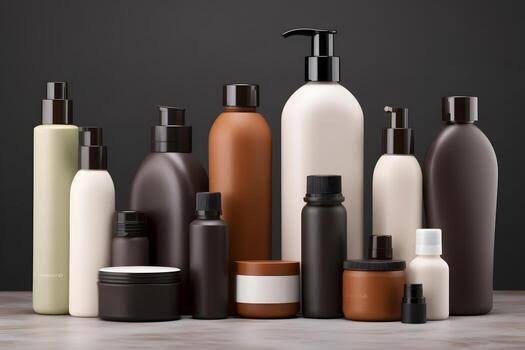
A coherent visual system can connect different product types. Consistent typography, colour choices, label placement and naming conventions can make shampoo, conditioner and styling products look like part of the same brand even when their containers differ.
Prioritise legibility
Customers should be able to read the brand name, product type and important product information. Avoid filling the label with too many decorative elements or using text that becomes difficult to read on the actual container.
Test packaging before approval
Evaluate packaging with the intended formula where appropriate. Consider compatibility, dispensing, leakage, closure performance and label durability under expected conditions. A container that looks good in a photograph may not be suitable for the finished product.
For more detail about choosing containers and labels, see the Brandology Labs website for information about its private label offering and product development opportunities.
9. Build a Range That Fits Your Budget
A product collection needs to be commercially realistic. Before selecting the final range, understand the costs and requirements associated with each item.
Depending on the manufacturing arrangement, relevant costs may include the finished product, packaging, labels, freight, storage, fulfilment, marketing and other operating expenses. Minimum order quantities and production lead times can also affect the amount of money you need before launch.
Compare the complete cost, not just the product price
A product with an attractive unit cost may still require additional packaging or operational expenses. Evaluate the complete cost structure before deciding whether it fits your intended retail price and sales channel.
Plan your initial inventory carefully
Launching too many products can spread your budget across inventory that may take time to sell. A focused collection can help you concentrate your marketing efforts and learn which products attract the most interest.
However, a smaller range is not automatically more profitable. The right decision depends on your audience, product economics and sales plan. Use realistic assumptions rather than relying on optimistic sales forecasts.
Understand your pricing structure
Work out how much each product needs to sell for to cover its relevant costs and contribute to your business expenses. If you intend to sell wholesale as well as directly to consumers, calculate the economics of both channels before setting prices.
Retail price, markup and gross margin are different measures. A pricing plan should account for the actual cost of goods and the other expenses involved in running the business.
10. Write Product Descriptions That Help Customers Choose
Product descriptions should explain what each item is, what it is intended for and how customers can use it. They should not simply repeat the product name or rely on vague promises.
For each product, consider including:
- The product type and its role in the routine.
- The intended application and relevant directions.
- Useful information about texture, hold or finish where applicable.
- Any appropriate usage precautions.
- A clear explanation of how it differs from related products.
For styling products, describe the intended finish in language customers understand. If two products are designed for different hold levels or styling effects, explain the difference clearly.
For shampoo and conditioner, focus on the formula's intended use and relevant characteristics. Avoid making unsupported claims about hair growth, treatment of medical conditions or guaranteed results.
Accurate product information supports customer confidence and helps establish a consistent voice across your website, packaging and marketing materials.
11. Use Visual Content to Demonstrate the Range
Hair care is a highly visual category. Product photography and demonstrations can help customers understand how products are used, how they are packaged and where they fit into a styling routine.
Develop a consistent visual direction before creating large amounts of content. This might include a defined background palette, lighting approach, product positioning and typography for any graphics.
Show the product clearly
Use images that make the packaging and label easy to see. Avoid excessive props or visual effects that distract from the product itself, particularly on collection pages where customers need to compare items quickly.
Demonstrate application
Where suitable, show how a styling product is applied and explain its intended role. Demonstrations can help customers understand the difference between products without relying entirely on written descriptions.
Make sure the demonstration reflects the actual product and follows its directions. Results can vary according to hair characteristics, technique and other factors, so avoid presenting one demonstration as a guaranteed outcome for every customer.
Keep the brand recognisable
Consistent image proportions, lighting, typography and product presentation can make the collection feel cohesive across your website, social channels and marketing materials.
For a private label brand, this consistency is especially important because customers are learning to recognise a brand they may not have encountered before.
12. Plan Your Launch Around a Clear Product Story
A launch should help customers understand what your brand offers and why the collection exists. Rather than announcing a list of products without context, build your communication around the customer need or routine that inspired the range.
Your launch content can introduce the brand, explain the role of each product and show how customers can choose items based on their preferences.
A practical launch sequence might include:
- Introduce the brand: Explain the audience and the purpose of the collection.
- Present the core products: Show the packaging and explain each product's intended role.
- Educate customers: Share useful guidance on product selection, application and styling preferences.
- Explain the differences: Help customers compare products with different functions, textures or hold levels.
- Make purchasing straightforward: Ensure the website provides clear product information, prices and ordering details.
Keep your messaging consistent across the website, email marketing and social channels. Every piece of content should help customers understand the brand rather than introduce a completely different identity.
13. Expand the Range Using Customer Feedback
Once your first products are available, use customer questions, feedback and sales patterns to evaluate the next steps for your collection.
You may discover that customers regularly purchase a particular styling product, request a complementary item or ask for clearer guidance about choosing between two products. These observations can inform your future plans.
However, do not assume that every suggestion justifies a new product. Consider whether the opportunity fits your audience, brand positioning and budget.
Look for patterns
One request may reflect an individual preference. Repeated requests or consistent sales patterns can provide stronger reasons to investigate a new product category.
Evaluate the business implications
Before adding an item, consider its manufacturing requirements, packaging, minimum order quantity, product photography, marketing needs and likely role in the collection.
Maintain a clear identity
Expansion should strengthen the brand's purpose. A styling-focused collection might expand into adjacent styling formats, while a care-focused range might prioritise complementary cleansing and conditioning options. The direction should follow customer needs and business evidence.
14. Your Private Label Hair Care Launch Checklist
Before moving forward with a new collection, review the following points to make sure your product decisions and launch plan are aligned.
- I have identified a clear target customer.
- I understand the hair characteristics or styling needs my range is designed to serve.
- The collection has a clear focus, such as hair care, styling or a defined combination.
- Every product has a specific purpose within the range.
- I have selected suitable foundational products.
- Any styling products support the intended customer and product concept.
- Product names make the product type and differences easy to understand.
- The visual identity is consistent across the planned collection.
- Packaging is suitable for the formula and intended use.
- Product descriptions and claims are accurate and supportable.
- Manufacturing requirements, quantities and lead times are understood.
- Pricing accounts for relevant product and operating costs.
- The website and launch content explain the collection clearly.
- I have a plan to review customer feedback before expanding the range.
This checklist is a planning aid rather than a substitute for product-specific testing, quality controls or regulatory review. Confirm the requirements that apply to the products and markets you intend to serve.
Frequently Asked Questions About Private Label Hair Care
What is a private label hair care brand?
A private label hair care brand sells hair care products under its own brand identity using products supplied or manufactured through a private label arrangement. The available product, branding and packaging options depend on the manufacturer and project.
Which products should I include in my first hair care range?
Choose products based on your target customer, the routine you want to support and your available budget. Shampoo and conditioner can form a foundation for some collections, while a styling-focused brand may prioritise products such as hairspray, curl cream, volume spray or texture powder.
Should I target one hair type or several?
Either approach can work. A focused audience may make it easier to communicate your brand's purpose, while a broader range may serve several groups if the products and positioning remain clear. Your decision should reflect customer research, product availability and your business plan.
Can I combine hair care and styling products in one collection?
Yes. A combined collection can support customers from cleansing through to styling. Organise the products around a clear routine or purpose so customers understand what each item does and how it relates to the rest of the range.
How many products should I launch with?
There is no universal number. The right launch size depends on your budget, customer needs, manufacturing requirements and marketing capacity. A focused collection can make it easier to explain the brand and evaluate customer response before expanding.
How do I make my private label hair care brand stand out?
Define a clear audience, select products that serve a meaningful purpose, develop a consistent visual identity and communicate product differences accurately. Professional presentation and helpful customer education can reinforce the brand's positioning.
What should I ask a private label hair care manufacturer?
Ask about available products, formula and packaging options, minimum order quantities, costs, production lead times, quality controls, testing requirements and the responsibilities involved in branding and labelling. Confirm the details for your specific project before committing.
When should I expand my hair care range?
Consider expansion after reviewing customer feedback, sales patterns, inventory performance and the commercial requirements of potential new products. Add products that strengthen your brand's purpose and can be supported by your budget and operations.
Build a Hair Care Range With a Clear Purpose
Creating a private label hair care brand begins with understanding your audience and the routines they want to support. From there, you can choose foundational products, select styling options where appropriate, develop a consistent identity and plan a realistic launch.
The strongest product ranges are not necessarily the largest. They are the ones where each product has a clear role, the differences between products are easy to understand and the collection reflects the needs of its intended customers.
By combining focused product selection with clear branding, accurate descriptions and practical planning, you can create a stronger foundation for launching and growing your own hair care business.
Ready to Develop Your Own Hair Care Brand?
Explore private label product opportunities with Brandology Labs and start planning a hair care range that reflects your business goals, target audience and brand identity.
Contact Brandology LabsProduct availability, manufacturing requirements, formula suitability and labelling obligations vary by product and market. Confirm the requirements for your intended range with the appropriate manufacturing and regulatory professionals before launch.