Private Label Beauty Packaging: How to Choose Bottles, Jars, Pumps and Labels for Your Product Line
Packaging is one of the first things customers notice about a beauty product. Before they experience the formula, they see the bottle, read the label, handle the container and form an impression of the brand. For entrepreneurs building a private label hair care, skincare, cosmetics or body care line, choosing the right packaging is an important part of creating products that look professional and work well in everyday use.
However, packaging involves more than selecting an attractive bottle. The container must suit the formula, dispense the product properly, protect it during storage and transport, display the necessary information and fit the brand's positioning and budget. A beautiful package that leaks, clogs or is difficult to use can undermine an otherwise excellent product.
Whether you are developing your first product or expanding an established range, this guide explains how to choose private label beauty packaging that balances presentation, functionality and practical manufacturing considerations.
1. Why Packaging Matters for a Private Label Brand
Private label manufacturing gives businesses the opportunity to offer products under their own brand identity. Packaging is where much of that identity becomes visible. It helps communicate what the brand stands for, who the product is intended for and how the product fits into a customer's routine.
Consider the difference between a minimalist shampoo bottle designed for a premium salon brand and a bright, playful bottle created for a family-oriented hair care range. Both containers may hold similar products, but their colours, typography, proportions and dispensing systems create different expectations.
Effective packaging supports several business objectives:
- Brand recognition: Consistent colours, typography, shapes and label layouts help customers recognise products across a collection.
- Customer usability: Appropriate closures, pumps and bottle sizes make products easier to use at home, in salons or while travelling.
- Product protection: Compatible packaging helps contain the formula and reduce exposure to environmental factors when the packaging system is suitable for that purpose.
- Shelf presentation: A coordinated appearance can make a collection look intentional and professionally developed.
- Clear communication: Labels help customers identify the product, understand its intended use and find important product information.
- Operational efficiency: Practical packaging can simplify filling, storage, shipping and product handling.
Packaging should therefore be considered during product development, not treated as a last-minute decorative decision. Your formula, container, dispensing system, label and intended sales channel need to work together.
2. Start With the Product Formula, Not the Bottle
One of the most common packaging mistakes is choosing a container because it looks attractive and only later discovering that it does not work well with the formula. The better approach is to begin with the product's physical characteristics and intended use.
Consider the formula's consistency
Thin liquids, creamy lotions, thick conditioners, styling pastes and powders each have different dispensing requirements. A narrow pump designed for a lightweight serum may not work with a dense cream. A fine mist sprayer may be unsuitable for a formula containing particles or ingredients that interfere with its mechanism.
For example, a lightweight detangling spray may suit a spray bottle, while a rich conditioner may be easier to dispense from a squeeze bottle or a compatible lotion-style pump. A styling clay may be more practical in a jar or another container with a sufficiently wide opening.
Think about how customers use the product
Packaging should support the movements and environment involved in using the product. Customers may apply hair products with wet hands, dispense shampoo in the shower, use styling products at a salon station or carry skincare products in a travel bag.
Ask practical questions before selecting a container. Can the customer open it easily? Is it comfortable to hold? Can the formula be dispensed without excessive effort? Will the closure stay secure during normal handling?
Check formula compatibility
Packaging materials and closures must be assessed for compatibility with the intended formulation. Depending on the formula and packaging system, potential issues may include leakage, material swelling, discolouration, changes in odour, corrosion, stress cracking or a change in dispensing performance.
Do not assume that a container is suitable simply because it is commonly used for cosmetics. The finished formula, contact materials, closure, liner and dispensing components should be considered together. Appropriate compatibility testing and stability evaluation help identify potential issues before a product is launched.
Brandology tip: When planning a private label product, discuss the formula and its packaging requirements together. This can help you narrow down suitable containers before committing to a particular bottle, jar or dispensing system.
3. Choosing the Right Bottle for Your Product
Bottles are widely used for liquid and semi-liquid products because they can be paired with different closures and dispensing systems. The best choice depends on the formula, the amount customers need per use, the product's positioning and how it will be sold.
Shampoo and conditioner bottles
Shampoo and conditioner packaging should be practical in wet environments. Squeeze bottles can provide straightforward dispensing, while flip-top closures and compatible pumps can offer convenient access. The right choice depends on the formula's viscosity, the bottle's dimensions and the intended customer experience.
If your brand targets salons, consider how the bottle will be handled during repeated use. If your products are intended for home use, consider storage space, ease of dispensing and whether the packaging makes it easy to distinguish shampoo from conditioner.
Explore Brandology's private label hair care collection when planning a range that may include shampoo, conditioner and styling products.
Skincare and body care bottles
Skincare and body care products vary widely in texture and application. Lightweight liquids may suit bottles with controlled dispensing, while lotions and creams may require pumps or other closures designed for thicker formulas.
Consider the intended amount of product per application. A body lotion used across larger areas of skin may benefit from convenient, repeated dispensing. A concentrated facial product may need a container that provides more controlled use and helps limit unnecessary product exposure.
Spray bottles
Spray packaging is useful for products intended to be distributed across a wider area. Depending on the formula and spray mechanism, this may include hair mist, detangling products, shine sprays and other suitable liquid formulations.
The spray pattern, output per use, trigger or actuator design and closure security all affect the user experience. Test the complete package with the intended formula rather than relying on the appearance of the sprayer alone.
4. When Should You Choose a Jar?
Jars are commonly associated with creams, masks, balms, clays, waxes and other products that customers need to access through a wide opening. Their broad surface can also provide room for distinctive shapes, lid finishes and label designs.
For styling products, a jar may make sense when customers need to scoop or collect a small amount of a dense formula. The same principle can apply to certain body care products and other formulations that are not suited to narrow dispensing mechanisms.
Advantages of jar packaging
- Wide openings can make thick formulas easier to access.
- Jars can support a substantial, premium-looking presentation.
- Different lid shapes, colours and finishes can help distinguish a brand.
- They can work well for products applied by hand or with a suitable applicator.
What to consider before selecting a jar
Jar packaging may expose more of the product to air and repeated contact during use than some alternative packaging systems. Depending on the formula, this can make hygiene, preservation and customer instructions particularly important. A jar is not automatically unsuitable, but the packaging choice should reflect the product's requirements.
Also consider how easily customers can remove the remaining product as the container empties. A wide opening may be useful, but a lid that is difficult to grip or a jar that is awkward to carry can detract from the experience.
For a cohesive range, match jar proportions and finishes with the rest of your packaging. A single design language across jars, bottles and tubes can help a collection feel unified even when different container types are needed.
5. Pumps, Sprayers and Closures: Small Details With a Big Impact
The closure is not simply an accessory. It influences how the product is dispensed, how securely the container closes and how customers interact with the package every day.
Dispensing pumps
Pumps can provide convenient, repeatable dispensing for compatible lotions, liquid soaps, shampoos and other formulas. When selecting one, consider the product's viscosity, the amount delivered with each pump, the dip tube length and whether the mechanism can dispense the formula consistently.
A pump that dispenses too much product may lead to waste. One that struggles to draw up a thick formula can frustrate customers. Testing should include repeated use and assessment of how the package performs as the contents decrease.
Fine mist sprayers and trigger sprayers
These mechanisms serve different purposes. Fine mist sprayers are designed to distribute suitable liquids in a fine spray, while trigger sprayers often provide a different output and grip experience. The choice should reflect the intended application rather than visual preference alone.
Check that the formula is appropriate for the mechanism and that the output is consistent. The closure should also be evaluated for leakage and protection during transport.
Flip-top and screw caps
Flip-top caps can provide quick access for products used frequently, while screw caps can offer a simple closure option for many container types. Both can be suitable when correctly matched to the bottle and formula.
Check that the closure fits securely, opens without excessive force and can withstand ordinary handling. If the product will be shipped, stored on its side or used in a shower, these conditions should be included in packaging evaluation.
Packaging details worth testing
- Ease of opening and closing.
- Dispensing consistency over repeated use.
- Leakage during storage and transport simulations.
- Closure fit and compatibility with the container neck.
- Comfort when operating with wet or slippery hands.
- Performance with the actual finished formula.
6. Selecting Packaging Materials
Packaging material affects the look, weight, durability and practical performance of a product. It can also influence manufacturing costs, shipping considerations and the options available for decoration.
Plastic packaging
Plastic containers are used across many beauty and personal care categories because they can be manufactured in different shapes, sizes and finishes. Depending on the material and design, they may offer a lightweight and practical solution for everyday products.
Different plastics have different properties. Their suitability depends on the formulation, the intended packaging structure, the product's expected shelf life and the conditions in which it will be stored and transported. The material should be selected and evaluated for the specific application.
Glass packaging
Glass can create a premium appearance and may be appropriate for selected skincare, fragrance and cosmetic products. It offers a different weight and tactile experience from plastic, but it also introduces considerations such as breakage risk, shipping weight and handling requirements.
Glass is not automatically the better choice for every premium brand. A well-designed plastic container can also look refined, particularly when its proportions, finish, closure and label are carefully coordinated.
Material choices and sustainability
Customers increasingly pay attention to packaging waste and material choices. If sustainability is part of your brand positioning, evaluate packaging options using specific, supportable information rather than relying on broad claims.
Consider whether a container is accepted in the recycling systems available to your intended customers, whether it uses recycled content, whether refill options are practical and whether the packaging can be separated into compatible materials. The actual answer depends on the packaging design and local waste infrastructure.
A lighter container or a refill concept may offer benefits in some situations, but sustainability should be assessed across the full packaging system. Avoid making claims such as "fully recyclable," "eco-friendly" or "sustainable" unless you can substantiate them for the specific package and relevant market.
7. How to Choose the Right Packaging Size
Packaging size affects the customer experience, product positioning, storage, shipping and cost per unit. A container that is too small may not suit the intended routine, while an unnecessarily large package can increase material use and shipping volume.
Begin with the product's intended use and the amount a customer is likely to apply. A styling product used sparingly may be offered in a different size from a shampoo used regularly by an entire household. A salon product may also have different usage requirements from a product designed for individual consumers.
Match size to the sales channel
Think about where the product will be sold and how customers will use it. Retail products need to work for the intended home-use routine. Salon products may need to withstand repeated professional use. Travel-oriented products may require compact packaging that meets applicable travel and transport requirements.
Consider the cost of the complete package
Do not compare container prices alone. The complete packaging cost may include the bottle or jar, closure, label, decoration, filling requirements, assembly, protective packaging and shipping. A larger container may have a higher unit cost but offer a different cost per volume. A smaller container may look less expensive yet require more packaging per amount of product sold.
Evaluate these figures alongside the intended retail price, expected margin and customer expectations. The goal is not to choose the cheapest container; it is to choose a suitable package that supports a viable product.
8. Designing Labels That Look Professional
Your label is one of the most visible parts of the packaging system. It communicates the brand name, product identity and important product information while contributing to the overall appearance of the range.
A professional label design is usually built around a clear hierarchy. Customers should be able to identify the brand and product without searching through too many competing design elements.
Build a clear visual hierarchy
Decide which information should be most prominent. For many products, the brand name and product name should be easy to identify, followed by a concise description or relevant product benefit. Supporting information can be arranged in a secondary position, provided that required text remains legible.
Use typography, spacing, contrast and alignment consistently. A restrained design can communicate confidence, while a colourful design may suit a brand with a more expressive personality. Neither approach is automatically superior; the important factor is consistency with your target audience and product positioning.
Check label dimensions before printing
A design that looks balanced on a computer screen may not work on the final container. Bottles can have curved surfaces, narrow panels, shoulders, seams and areas where labels may wrinkle or lift. Jars may have limited space on the sidewall or lid.
Confirm the usable label area and test the artwork on the actual container or a dimensionally accurate sample. Review the placement, wraparound alignment, margins, text size and how the label looks when the package is held in the hand.
Choose finishes with care
Matte, gloss, transparent and metallic effects can create different visual impressions. The right finish depends on the container material, the artwork, the brand identity and the conditions in which the product will be used.
For products used in bathrooms or salons, consider whether the label material and adhesive are suitable for the expected moisture and handling conditions. Test the finished label rather than assuming that every label stock will perform equally well on every container.
Make sure the label information is appropriate
Beauty product labelling requirements vary by product category and market. Depending on where you sell, requirements may cover product identity, ingredient declaration, responsible business details, net contents, directions, warnings, batch identification and other information.
Claims also require care. Avoid implying that a cosmetic product treats or cures a medical condition unless the product is appropriately classified and authorised for that purpose. Check the applicable rules for every market in which you intend to sell, and have the final artwork reviewed before production.
9. Create a Consistent Look Across Your Product Collection
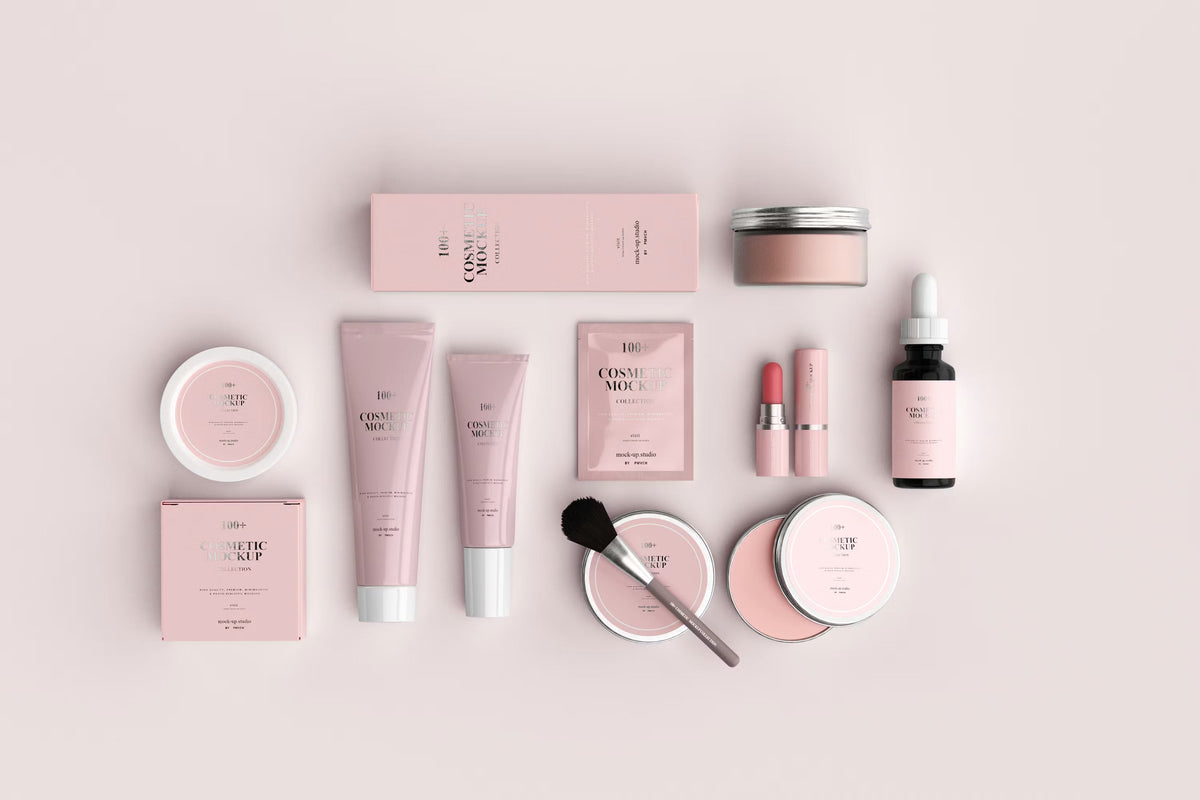
A collection should feel like a family of related products, even when each item serves a different purpose. Consistency makes it easier for customers to recognise your brand and can help a new business appear more established.
Start by defining a few core design rules that can be repeated across the range. These might include a primary typeface, a limited colour palette, a consistent logo position, a standard approach to product naming and a repeatable label layout.
Keep the brand identity consistent
Consistency does not mean that every product must look identical. You can use colour accents, small graphic differences or distinct product names to help customers distinguish between formulas while keeping the overall design language unified.
For example, a hair care range might use the same typography and label structure across shampoo, conditioner and styling products, with a restrained colour difference to identify each product. A skincare range might use a consistent layout while adjusting the emphasis according to the product's role in the routine.
Design for future expansion
Think beyond the first product. If you intend to introduce additional formulas later, choose a packaging system that can accommodate those additions without requiring a complete redesign.
Planning ahead can help keep packaging decisions coherent as your business grows. However, do not force every formula into the same container if the product's consistency or use requirements call for a different format. A consistent brand identity can connect different packaging types.
10. Packaging Mistakes That Can Cost Your Brand
Packaging errors can lead to additional costs, delayed launches and customer dissatisfaction. Many of these issues can be reduced by reviewing the packaging system early and testing it before committing to a full production run.
Choosing appearance over functionality
A visually impressive package is only effective if it performs properly. A pump that cannot dispense the formula, a lid that is difficult to close or a bottle that leaks can create avoidable problems. Assess appearance and usability together.
Ordering before checking samples
Photographs and product specifications are useful for shortlisting options, but they cannot fully communicate how a container feels or performs. Whenever possible, inspect samples and test them with the intended formula before approving a larger order.
Ignoring the finished dimensions
Label artwork, caps, pumps and bottle proportions need to be considered as a complete design. A label that is too wide, text that wraps awkwardly or a closure that overwhelms the container can make a product look unfinished.
Overcomplicating the design
Adding more colours, fonts, graphics and claims does not necessarily make a package more attractive. Too many competing elements can make the product difficult to read and weaken brand recognition. Prioritise the information customers need and give the design enough space to breathe.
Forgetting transport and storage
Packaging should be evaluated for the journey from manufacturing and filling to storage, shipping and customer use. Consider how products will be packed, whether closures are secure, how fragile components will be protected and whether the package can tolerate expected handling conditions.
Leaving compliance until the end
Required label information can affect the amount of space available for branding. If you design the entire label around a logo and a short product name before checking applicable requirements, you may need to redesign it later. Confirm the required information early in the process.
11. How Packaging Choices Affect Your Budget
Packaging is part of the product's overall cost structure. The right choice should support the brand's intended price point while leaving room for manufacturing, fulfilment, marketing, distribution and profit.
When requesting packaging options, ask for a clear breakdown of the relevant costs. Depending on the arrangement, these may include the primary container, closure, label, printing or decoration, assembly, minimum quantities, shipping and any setup charges.
Balance premium presentation with practicality
Premium positioning does not always require the most expensive bottle or the most elaborate decoration. A clean label, well-proportioned container, suitable closure and consistent design can create a polished result without unnecessary complexity.
Likewise, choosing the least expensive option without evaluating its appearance or performance may compromise the brand. Compare packaging based on its complete cost and suitability, rather than the price of one component in isolation.
Ask about minimum order quantities
Minimum order quantities can vary by container type, supplier, decoration method and production arrangement. Some custom packaging options may require higher commitments than standard containers. For a new brand, this can affect how much capital is tied up in packaging before products are sold.
Ask whether the available options fit your launch quantity and future plans. A suitable existing container with customised branding may be more practical for an initial launch than investing in a completely bespoke container immediately.
12. Standard Packaging or Custom Packaging?
Private label brands may be able to choose from existing packaging formats or explore more customised options, depending on the manufacturer's capabilities and the product requirements.
Existing packaging formats
Using an existing bottle, jar or tube can help simplify the packaging decision. It allows you to focus on selecting a suitable format, coordinating the label and creating a consistent brand identity. It may also offer more manageable minimum quantities than a fully custom mould or container.
This approach can be useful for businesses testing a product concept, launching a first collection or prioritising investment in formula selection and brand development.
Custom packaging
Custom packaging can provide more control over shape, dimensions, colour and distinctive visual details. It may be worth considering when a brand has established demand or a clear reason to invest in a more differentiated container.
However, custom packaging may involve design development, tooling, approvals, longer lead times and higher minimum quantities. These details vary by project, so obtain clear information before making a commitment.
Choose based on your launch stage
There is no single correct choice for every business. Consider your budget, target market, sales forecasts, product requirements and how important a distinctive container is to your positioning.
A brand can establish a strong identity using existing packaging, then review more customised options as its range and customer base develop. The priority is to launch with packaging that is functional, consistent and appropriate for the product.
13. Your Packaging Approval Checklist
Before approving packaging for production, use a structured checklist to make sure that design, performance and operational details have been reviewed.
- The container is suitable for the formula and intended application.
- The closure or dispensing mechanism works with the product's consistency.
- Samples have been reviewed for appearance, usability and fit.
- Appropriate formula compatibility and stability assessments have been considered.
- The container and closure have been checked for leakage and secure handling.
- The package size suits the intended customer and sales channel.
- The label dimensions have been confirmed against the actual container.
- The final label artwork has been reviewed for legibility and required information.
- Brand colours, typography and product naming are consistent across the range.
- Packaging quantities and costs fit the launch budget.
- Minimum order quantities, lead times and approval stages are understood.
- Transport, storage and protective packing have been considered.
- Any environmental or product performance claims can be substantiated.
- The final package has been approved before the production commitment.
This checklist will not replace product-specific testing or regulatory review, but it provides a practical starting point for a more organised packaging process.
14. Working With a Private Label Manufacturer
Packaging decisions are easier to manage when they are discussed alongside the formula, production requirements and brand identity. A private label manufacturer can help clarify available formats and explain which practical considerations should be resolved before production.
When evaluating a manufacturing partner, ask how packaging choices are coordinated with product development. Find out what information is needed to recommend a container, how samples and artwork are approved, which packaging components are available and what the expected production process looks like.
It is also useful to clarify who is responsible for label artwork, regulatory review, packaging sourcing and final approvals. Responsibilities can differ between suppliers and projects, so make sure the arrangement is understood before work begins.
Brandology Labs supports businesses looking to develop their own branded products across categories including hair care, skincare, cosmetics, body care, tattoo care and pet grooming. If you are exploring a new range, start with the Brandology Labs website to learn more about the business and its product opportunities.
You can also browse the available cosmetics collection or pet care collection as you consider which category best fits your business idea.
15. A Practical Step-by-Step Packaging Plan
If you are starting from scratch, the following process can help keep packaging decisions manageable.
Step 1: Define your customer and positioning
Write down who the product is for, where it will be sold and what you want the packaging to communicate. A professional salon line, a minimalist skincare range and a playful pet grooming collection may require different design decisions.
Step 2: Confirm the product requirements
Understand the formula's consistency, intended application, dispensing needs and relevant compatibility requirements. These factors will help determine which container formats are appropriate.
Step 3: Shortlist suitable containers
Compare bottles, jars, tubes or other appropriate formats based on function, appearance, size and cost. Review the closure or dispensing mechanism as part of the same package rather than treating it as a separate afterthought.
Step 4: Establish the visual direction
Define the colour palette, typography, label layout and product naming system. Keep the design focused on the information customers need and the impression you want the brand to create.
Step 5: Test samples and artwork
Review the physical container, evaluate usability and assess the label on the actual packaging. Where appropriate, conduct compatibility, stability and transport-related assessments before final approval.
Step 6: Confirm the commercial details
Check quantities, pricing, lead times, artwork responsibilities and production requirements. Make sure the packaging decision supports the wider launch plan and does not create unnecessary complexity.
Step 7: Approve the complete package
Review the finished combination of formula, container, closure and label. Confirm that all relevant checks have been completed and that the approved design matches what is intended for production.
The goal is simple: choose packaging that protects the product appropriately, makes it easy to use, communicates the brand clearly and supports the business commercially. Every component should have a purpose.
Frequently Asked Questions About Private Label Beauty Packaging
What is private label beauty packaging?
Private label beauty packaging is the container, closure and branded label used for a product sold under a business's own brand. Depending on the manufacturing arrangement, a business may select existing packaging options and apply its own branding, with custom packaging possibilities varying by supplier and project.
How do I choose packaging for a new beauty product?
Start with the formula's consistency, compatibility requirements and intended use. Then compare suitable containers, closures, sizes, label options and costs. Review samples and complete appropriate testing before approving packaging for production.
Is a bottle or a jar better for skincare products?
Neither format is always better. Bottles may suit liquids and products that benefit from controlled dispensing, while jars can be useful for thicker creams and products that require a wider opening. The correct choice depends on the formula, dispensing needs, compatibility and customer experience.
Can I use the same packaging design for an entire product range?
Yes, a consistent design system can help different products look like part of the same brand. However, the container and dispensing system may need to vary according to each formula. Shared typography, colours, label structure and brand elements can maintain consistency across different packaging formats.
Should a new brand choose custom packaging?
Not necessarily. Existing packaging formats can be a practical starting point because they may offer more manageable costs and quantities. Custom packaging can provide greater visual differentiation but may require additional investment, development time and minimum quantities. The right decision depends on your budget, goals and launch stage.
What should be included on a beauty product label?
Label requirements depend on the product category and the markets where it will be sold. Information may include product identity, ingredients, net contents, directions, warnings, responsible business details and batch information. Check the applicable requirements and have the final artwork reviewed before production.
Why should packaging be tested with the finished formula?
Packaging that looks suitable may not perform correctly with every formula. Testing can help identify issues involving compatibility, dispensing, leakage, closure performance or changes during storage. The appropriate assessments depend on the product and packaging system.
How can I make my private label products look more premium?
Focus on a clear visual hierarchy, consistent typography, suitable colours, balanced label spacing and packaging proportions that suit the product. A refined design does not always require expensive custom containers. Usability, print quality and consistency across the collection are also important.
When should I finalise packaging during product development?
Begin discussing packaging while the product is being developed, so formula requirements and container options can be considered together. Final approval should follow the relevant sample reviews, compatibility assessments, artwork checks and commercial confirmations needed for the specific product.
Build a Product Range That Looks and Feels Like Your Brand
Choosing packaging is an important part of turning a product concept into a market-ready brand. The right combination of container, closure, label and visual identity can help customers recognise your products, use them confidently and understand what your business offers.
The strongest packaging decisions balance appearance with performance. Start with the formula, understand your customer's needs, select a practical container, create a clear label and test the complete package before committing to production. By approaching packaging as part of product development rather than an afterthought, you can create a more consistent and professional collection.
If you are planning a private label hair care, skincare, cosmetics, body care, tattoo care or pet grooming line, explore Brandology Labs to learn more about building your own product range.
Ready to Develop Your Own Product Line?
Turn your business idea into a branded product range with the right combination of product selection, packaging and brand identity. Connect with Brandology Labs to discuss your plans and explore the next steps.
Contact Brandology LabsPackaging suitability, testing requirements and labelling rules vary by formula, packaging materials and sales market. Confirm product-specific requirements with the appropriate manufacturing and regulatory professionals before launch.