

The New Beauty Brand Playbook: Industry Trends Shaping Private Label in 2026
The New Beauty Brand Playbook: Industry Trends Shaping Private Label in 2026
The beauty industry is moving beyond traditional product categories. Today’s emerging brands are building around skinification, sensoriality, multifunctionality, ingredient-led positioning, premiumisation, wellness, ritualisation, and category convergence. For entrepreneurs launching a private label brand, these shifts are creating new opportunities to build focused product ranges with a strong point of view.
Beauty consumers are no longer simply choosing between shampoo, conditioner, moisturiser, serum, or styling products. Product discovery is increasingly influenced by the experience surrounding the formula, the ingredients, the texture, the packaging, the brand story, and how easily a product fits into an existing routine.
For a new private label brand, this creates an important opportunity. You do not necessarily need to compete by launching hundreds of products. Instead, you can build a focused collection around a specific consumer need, aesthetic, ingredient story, lifestyle, or product experience.
The modern beauty brand playbook is about creating products that are easy to understand, visually recognisable, commercially relevant, and connected to a larger brand world.
The opportunity for private label brands: Industry trends can provide inspiration for product development, but the strongest launches translate those trends into a clear product concept rather than simply copying whatever is currently popular.
What Is Driving the New Beauty Brand Landscape?
The beauty industry has become increasingly fragmented. Large established companies continue to dominate significant portions of the market, but smaller brands can now build audiences through social media, creator partnerships, direct-to-consumer websites, professional communities, marketplaces, and niche retail.
This has changed how brands approach product development.
Instead of creating products for everyone, emerging brands can focus on a specific consumer group or use case. A brand can become known for a particular aesthetic, ingredient philosophy, hair type, skin concern, grooming routine, or product format.
This is where concepts such as micro-positioning, community-led branding, and niche beauty become important.
The opportunity is not necessarily to become the biggest brand in a category. It can be to become highly relevant to a clearly defined customer.
1. Skinification Is Expanding Beyond Skincare
One of the biggest industry buzzwords in beauty is skinification.
The term originally described the incorporation of skincare-inspired ingredients, technologies, and routines into other beauty categories. The concept has expanded across hair care, scalp care, body care, cosmetics, and even grooming.
Hair care is one of the clearest examples.
Consumers increasingly encounter products positioned around ingredients, scalp care, moisture, nourishment, protection, and targeted treatment rather than simply traditional cleansing and conditioning.
This creates an opportunity for private label hair care brands to think beyond the basic shampoo-and-conditioner model.
A brand might build a collection around:
- Scalp-focused routines
- Moisture and hydration
- Repair-focused care
- Protective styling
- Curly hair routines
- Leave-in treatments
- Hair oils and serums
- Professional-inspired treatments
The underlying idea is simple: hair is not just something to style. It can become part of a broader care ritual.
2. Scalp Care Is Becoming Its Own Conversation
Scalp care has also become an increasingly visible part of hair care conversations.
This reflects a broader movement toward treating beauty routines as connected systems. Instead of focusing exclusively on the visible result, consumers are becoming more interested in the care process behind that result.
For a private label brand, scalp-focused products can provide another way to differentiate a collection.
Rather than launching another generic shampoo, a brand can develop a more specific product story around the scalp and hair routine.
This is an example of how a broader industry trend can become a product-development opportunity.
Trend translation: Do not simply copy the phrase “scalp care.” Build a product range that explains why scalp care matters to your particular customer and how it fits into their routine.
3. Multifunctional Beauty Is Still Highly Relevant
Another major concept shaping product development is multifunctionality.
Consumers often want products that can simplify routines or perform more than one role.
This can include products that combine treatment and styling, cleansing and conditioning, colour and care, or multiple finishing functions.
For a new brand, multifunctional products can also provide a compelling marketing story.
A product can be positioned around convenience without requiring the brand to build an enormous product range.
The key is to make sure the multifunctionality is meaningful. A product should perform its intended functions well rather than simply collecting multiple claims on a label.
4. Sensoriality Is Becoming Part of Product Positioning
The word sensoriality is increasingly relevant when discussing modern beauty products.
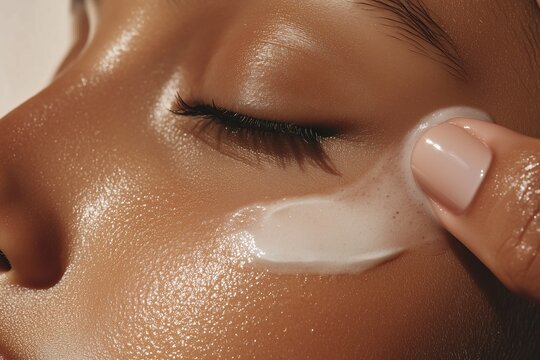
It refers to the sensory experience of using a product, including texture, fragrance, application, appearance, spreadability, finish, and the overall feeling created during use.
This is particularly important for private label brands because the product experience can become part of the brand identity.
Think about the difference between:
- A rich cream versus a lightweight lotion
- A glossy gel versus a soft cream
- A fine mist versus a heavier spray
- A whipped mousse versus a dense styling cream
- A silky serum versus a dry-touch oil
The formula is doing more than delivering functional performance. It is also creating an experience.
That experience can then influence photography, video, social media content, product descriptions, packaging, and even the language used in advertising.
5. Texture Is Becoming a Marketing Asset
Product texture is particularly powerful in a social-first beauty environment.
A visually interesting cream, gel, mousse, oil, powder, spray, or serum can become content in its own right.
This is one reason texture marketing and sensory content are useful concepts for emerging brands.
A product can be photographed in extreme macro. It can be shown being applied. It can be spread across skin or hair. It can be dispensed from packaging. It can be incorporated into satisfying short-form video.
This creates additional content opportunities beyond a traditional product photograph.
For a private label brand, selecting products with distinctive textures can therefore influence not only the customer experience but also the visual content strategy.
6. Ingredient-Led Branding Continues to Influence Product Development
Another familiar industry phrase is ingredient-led beauty.
This approach puts individual ingredients or ingredient stories closer to the centre of the product identity.
Instead of presenting a product as simply a shampoo, conditioner, cream, spray, or serum, the brand can create a stronger narrative around selected ingredients and their role in the formula.
Ingredient-led branding can be especially useful for private label businesses because ingredients can influence:
- Product naming
- Packaging design
- Photography
- Educational content
- Website copy
- Social media campaigns
- Product collections
The important consideration is responsible communication. Ingredient stories should be accurate, appropriate for the formula, and supported by the product's intended use.
7. Premiumisation Is Not Just About Price
The term premiumisation is frequently used across the beauty industry.
Premiumisation does not necessarily mean creating the most expensive product possible. It is about creating a product experience that communicates greater perceived value.
That perception can come from many elements:
- Packaging
- Typography
- Colour systems
- Formula texture
- Fragrance experience
- Photography
- Product naming
- Ingredient storytelling
- Website presentation
- Customer experience
This is particularly relevant to private label businesses because the same underlying product category can be positioned in very different ways depending on the brand identity surrounding it.
A bottle of shampoo is a category product. A carefully designed shampoo collection with a consistent visual language, clear positioning, distinctive texture, and strong product story becomes a brand experience.
8. Ritualisation Turns Products Into Routines
Another useful industry concept is ritualisation.
Rather than selling individual products, brands increasingly have opportunities to sell routines.
A routine might involve cleansing, conditioning, treatment, styling, and finishing. Or it might involve preparation, application, and maintenance.
This approach gives brands a way to increase the relevance of multiple products without making each product compete independently.
For example, a private label hair care brand could create:
- A wash day ritual
- A styling ritual
- A curl care ritual
- A smoothing routine
- A volume routine
- A finishing routine
The products become connected by the customer journey.
9. Beauty and Wellness Continue to Converge
The boundaries between beauty, personal care, and wellness have become increasingly fluid.
Consumers often think about beauty as part of a broader lifestyle rather than as a completely separate category.
This has created opportunities for brands that can communicate concepts such as self-care, sensory experience, daily rituals, confidence, relaxation, and personal expression while remaining grounded in the actual function of the product.
For private label entrepreneurs, this creates opportunities in categories such as body care, hair care, skincare, grooming, and cosmetics.
However, brands should avoid making unsupported health or therapeutic claims simply because wellness language is popular.
The strongest positioning connects the emotional experience of the product with its genuine cosmetic or personal-care function.
10. Category Convergence Is Creating New Product Opportunities
One of the more interesting developments in beauty is category convergence.
The traditional boundaries between hair care, skincare, body care, cosmetics, and grooming are becoming less rigid.
A brand that begins in one category may eventually have opportunities to expand into another category if the new products make sense for its audience.
For example, a hair care brand could eventually explore scalp or body care. A cosmetics brand could develop complementary skincare products. A grooming brand could expand into body care.
The opportunity comes from understanding what the customer already trusts your brand to provide.
Expansion should feel like a natural extension rather than an unrelated product launch.
11. Hero SKUs Are More Important Than Huge Catalogues
The phrase hero SKU is widely used in consumer product and beauty conversations.
A hero SKU is essentially a standout product that represents a significant part of a brand's identity or customer proposition.
For emerging private label brands, having a hero product can be strategically useful.
Instead of asking how many products can be launched, ask:
Which product best communicates what this brand is about?
That product can then become the centre of your photography, social content, paid advertising, sampling, influencer outreach, and website messaging.
Supporting products can be built around it as the brand grows.
12. Community-Led Beauty Is Changing Brand Building
Another important buzzword is community-led growth.
Social platforms have made it possible for smaller brands to build audiences around shared interests and identities.
This means a brand does not always need to begin with mass-market positioning.
A company could build around salon professionals, curl enthusiasts, grooming professionals, tattoo artists, beauty creators, makeup enthusiasts, or another clearly defined community.
The community itself can then influence product development.
Customers can provide feedback about textures, packaging, formats, product gaps, and routine needs.
This creates a feedback loop between brand and customer.
Community-led product development: Listen first, identify recurring needs, then use those insights to decide which products deserve development and marketing attention.
13. Professional-Inspired Products Create Strong Positioning Opportunities
The influence of professionals continues to shape beauty purchasing decisions.
Consumers often look to hairstylists, barbers, groomers, makeup artists, tattoo professionals, estheticians, and creators for product recommendations.
This creates opportunities for brands built around professional expertise.
A salon owner, for example, may already have credibility with customers. Creating a private label product range can allow that expertise to extend beyond the service itself.
Instead of simply recommending someone else's product, the professional can create a branded product experience connected to their own business.
This is one reason private label manufacturing can be particularly relevant to salons and professional service businesses.
14. Social Commerce Is Influencing Product Design
Beauty products increasingly need to work visually online.
A product may be discovered through a short video, creator recommendation, product demonstration, transformation content, texture shot, or customer-generated post.
This means brands should consider social-first product presentation during development.
Questions worth asking include:
- Does the packaging look recognisable on a small screen?
- Is the product visually distinctive?
- Can the texture be demonstrated?
- Can the product be used in satisfying short-form content?
- Is the benefit easy to communicate?
- Can customers understand the product quickly?
This does not mean every product needs to become a social media gimmick. It means digital discovery should be considered as part of modern product strategy.
15. Visual Identity Is Becoming Part of Product Development
In a highly visual industry, branding and product development increasingly overlap.
The shape of the bottle, label proportions, typography, colour palette, finish, product texture, and photography style all contribute to how a product is perceived.
This is why brand world is another useful concept for emerging beauty businesses.
A brand world is the visual and emotional environment surrounding the product.
It includes the website, packaging, photography, social media, typography, colours, product names, campaign imagery, and overall tone.
A cohesive brand world can make a relatively small product range feel much more intentional.
16. Clean Design Is Not the Same as Generic Design
Minimalism remains influential in beauty branding, but simply using a white label and black typography does not automatically create a premium brand.
Modern minimalism depends on details.
Typography, spacing, hierarchy, material choices, photography, colour balance, and product architecture all contribute to the final result.
For private label businesses, this creates an important opportunity because the same formula can potentially be presented through very different brand identities.
The goal should be to create a visual system that feels distinctive rather than simply following a generic minimalist template.
17. The Rise of Product Architecture
As beauty brands expand, product architecture becomes increasingly important.
Product architecture is the way products are organised within the brand.
This can include collections, product families, colour systems, naming conventions, packaging hierarchy, and routine-based organisation.
A clear architecture makes it easier for customers to understand what belongs together.
For example, a hair care brand might organise its products into:
- Cleanse
- Condition
- Treat
- Style
- Finish
A cosmetics brand could organise products around complexion, eyes, lips, and finishing.
A pet grooming brand could organise products around cleanse, condition, detangle, style, and finish.
The exact structure depends on the brand, but the principle is the same: make the range easy to understand.
18. Private Label Is Becoming a Brand-Building Tool
Private label is sometimes viewed simply as a way to put a logo on an existing product.
For modern entrepreneurs, it can be much more strategic than that.
Private label can provide a route to developing a branded product collection without requiring a business to manufacture every formula from scratch.
This can allow entrepreneurs to focus resources on the areas where differentiation matters most:
- Brand strategy
- Product selection
- Positioning
- Packaging
- Customer experience
- Content
- Community
- Distribution
The manufacturing relationship remains important, but the brand itself becomes the vehicle through which the customer experiences the product.
19. From Trend Chasing to Trend Translation
There is a major difference between trend chasing and trend translation.
Trend chasing means launching something simply because it is currently popular.
Trend translation means understanding why a trend is gaining attention and deciding whether the underlying consumer behaviour is relevant to your brand.
For example, if skinification is influencing hair care, you do not necessarily need to copy every skincare-inspired product.
Instead, ask what customers are responding to. Perhaps they want more targeted routines, ingredient transparency, specialised products, or a more care-focused approach.
That insight can then influence your own product development.
The strongest trend strategy is selective: identify the trends that align with your customer, translate them into your own product language, and leave the rest behind.
20. What This Means for New Private Label Brands
For an entrepreneur preparing to launch a beauty or personal care brand, the current industry landscape creates more possibilities than ever.
But more possibilities also create more competition.
The answer is not necessarily to launch more products.
It is to create a more intentional product concept.
A strong private label launch can combine:
- A clearly defined target customer
- A specific customer need
- A focused product range
- A compelling hero SKU
- Relevant ingredients or product benefits
- A distinctive sensory experience
- A cohesive packaging system
- A clear brand story
- Content designed for digital discovery
- A realistic plan for future product expansion
This creates a foundation that can adapt as the business grows.
How Brandology Labs Can Help You Turn Trends Into Products
At Brandology Labs, we work with businesses looking to develop their own branded products across multiple beauty and personal care categories.
Our private label offering can support entrepreneurs who want to build a branded product range without having to develop every product from the ground up.
We work across categories including hair care, cosmetics, skincare, tattoo care, body care, and pet grooming.
For entrepreneurs interested in hair care, you can explore our private label hair care collection for product ideas across cleansing, conditioning, styling, treatment, and finishing.
For beauty entrepreneurs, our private label cosmetics collection provides another starting point for developing a branded beauty range.
Businesses entering pet grooming can explore our private label pet care products as potential building blocks for their own product collection.
If you are looking for something more specialised, Brandology Labs can also help businesses explore manufacturing and formulation options based on their product concept.
The Future of Beauty Belongs to Brands With a Point of View
The beauty industry will continue to generate new buzzwords, formats, ingredients, aesthetics, and product concepts.
Some trends will disappear quickly. Others will become long-term shifts in consumer behaviour.
For private label entrepreneurs, the challenge is not to predict every trend perfectly. It is to understand which changes matter to their customers and turn those insights into products that feel relevant to the brand.
Skinification, sensoriality, premiumisation, multifunctionality, ritualisation, category convergence, ingredient-led beauty, community-led growth, and social-first product design all point toward the same broader idea.
Consumers are buying more than a formula.
They are buying a product experience, a routine, an identity, an aesthetic, and a reason to choose one brand over another.
That creates a powerful opportunity for emerging brands.
You do not need to launch everything.
You need to know what your brand stands for, who it is for, and why your products belong together.
Once that foundation is clear, industry trends become tools rather than instructions.
Ready to Build Your Next Beauty Brand?
Turn your product concept into a branded collection with Brandology Labs. Explore our private label categories or speak with our team about your manufacturing needs.
Frequently Asked Questions
What beauty trends are influencing private label brands in 2026?
Major industry themes include skinification, sensorial product experiences, multifunctional products, ingredient-led positioning, premiumisation, wellness and beauty convergence, ritual-based routines, category convergence, community-led brands, and social-first product presentation.
What does skinification mean in beauty?
Skinification generally refers to applying skincare-inspired ingredients, routines, concepts, and positioning to other beauty categories. Hair care and scalp care are examples where this approach can influence product development and marketing.
What is sensorial beauty?
Sensorial beauty focuses on the experience of using a product, including its texture, fragrance, application, appearance, spreadability, and finish. These characteristics can become important parts of a product's positioning and content strategy.
What is a hero SKU?
A hero SKU is a standout product that strongly represents a brand or serves as an important entry point into its product range. New brands can use a hero product as the centre of their marketing and build supporting products around it.
Should a new private label brand follow beauty trends?
Trends can provide useful inspiration, but brands should evaluate whether a trend is relevant to their target customer and positioning. Translating a trend into a brand's own product concept can be more useful than simply copying a popular product format.
Can private label brands use premiumisation strategies?
Yes. Premiumisation can involve packaging, product texture, visual identity, ingredient storytelling, photography, naming, website presentation, and customer experience. Premium positioning does not necessarily depend on making a product the most expensive option in its category.
Can Brandology Labs manufacture products across multiple beauty categories?
Brandology Labs works across categories including hair care, cosmetics, skincare, tattoo care, body care, and pet grooming, giving businesses opportunities to develop focused collections or expand their product range over time.
Read more
The next generation of beauty brands is not competing on formula alone. Product experience, sensory branding, visual identity, discovery commerce, creator culture, personalisation, and premiumisati...

Launching a private label beauty brand does not mean you need a catalogue filled with dozens of products on day one. In fact, one of the most effective ways to build a focused brand is to start wit...