
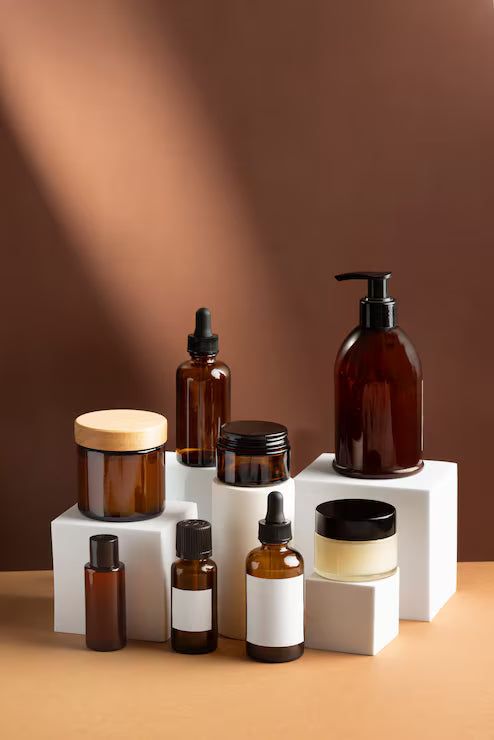
Private Label Beauty Branding: How to Create a Product Line That Looks Like a Real Brand
Private Label Beauty Branding: How to Create a Product Line That Looks Like a Real Brand
Launching a private label beauty product gives you access to a finished formula, but the product itself is only one part of building a successful brand. The way your products are named, packaged, photographed, positioned and presented can determine whether customers see them as a cohesive brand or simply another generic product.
This is one of the biggest opportunities for entrepreneurs entering the private label beauty market.
You do not have to manufacture every formula from scratch to create a distinctive beauty brand. Your opportunity is to build the identity around the products and create a product experience that feels intentional from the first interaction.
That means thinking about brand positioning, packaging architecture, product naming, typography, colour, photography, product hierarchy, sensory identity and collection consistency before launching your products.
A strong private label beauty brand should not look like a collection of unrelated products with a logo added at the end. It should look like a complete brand from the moment a customer discovers it.
Private label gives you the product foundation. Branding is what turns that foundation into a recognisable business.
What Makes a Private Label Product Look Like a Real Brand?
There is no single visual formula that makes a beauty brand look premium or established.
Instead, strong brands usually have consistency.
Their packaging looks related. Their product names follow a clear system. Their photography feels recognisable. Their website reflects the same visual identity as their packaging. Their social media content looks like it belongs to the same brand.
These details create what can be described as a brand world.
The customer begins to recognise the business before they even read the logo.
This is particularly important for private label brands because the underlying formula may be available to other businesses. Your brand identity becomes one of the ways you create differentiation.
1. Start With Brand Positioning
Before choosing colours, fonts or packaging, determine what your brand stands for.
Brand positioning describes the space your brand wants to occupy in the customer's mind.
Are you creating a professional salon-focused hair care brand?
A minimalist skincare brand?
A playful pet grooming brand?
A premium body care collection?
A modern cosmetics brand?
These decisions influence everything that follows.
Your positioning should consider your target customer, product category, price point, product benefits and the type of experience you want the customer to associate with the brand.
Without this foundation, visual decisions can become disconnected.
2. Know Who Your Brand Is For
A brand designed for professional hairstylists does not necessarily need to look like a brand designed for teenagers discovering beauty products on social media.
The customer influences the design.
Think about:
- Age and lifestyle
- Where they discover products
- What they value
- How they shop
- What products they already use
- What price range they expect
- What visual styles attract them
- What problems they want solved
The goal is not to design for everyone.
The goal is to create a brand that feels particularly relevant to the people you want to reach.
3. Create a Distinctive Brand Concept
Once you understand your customer, create a central concept for the brand.
This concept becomes a filter for future decisions.
For example, a hair care brand might be built around effortless professional styling.
A body care brand might focus on modern everyday rituals.
A pet grooming brand could focus on professional grooming performance with a contemporary aesthetic.
A cosmetics brand could focus on minimal, versatile products for everyday use.
The concept does not have to appear literally in every product name.
It simply provides direction.
A strong brand concept gives your packaging, photography, website and product range something to agree on.
4. Build a Brand Identity Before Designing Individual Products
One common mistake is designing each product independently.
The shampoo gets one style. The conditioner gets another. The styling spray looks completely different. Then the brand attempts to make everything match after the fact.
It is usually more effective to establish the brand identity first.
Define:
- Primary typefaces
- Secondary typefaces if required
- Core colour palette
- Accent colours
- Logo system
- Graphic elements
- Photography direction
- Iconography
- Product naming style
- Packaging hierarchy
Once these foundations are established, individual products can be designed within the same system.
5. Choose Typography That Matches the Brand
Typography is one of the fastest ways to change the personality of a beauty brand.
A refined serif can create a different impression from a geometric sans serif.
A condensed typeface can feel editorial, while a soft rounded typeface may feel more approachable.
The important thing is consistency.
Choose typography that reflects the brand positioning and can work across packaging, website design, social media and printed materials.
Your product names, headings and supporting information should have a clear hierarchy.
Customers should immediately understand what is the brand, what is the product and what is the supporting information.
6. Develop a Colour System, Not Just a Favourite Colour
A brand colour is only one part of a colour system.
Your collection may need:
- A primary brand colour
- Neutral supporting colours
- Product-specific colours
- Accent colours
- Background colours
A good colour system allows the collection to evolve.
For example, your shampoo and conditioner can share the same core visual identity while using subtle differences to distinguish the products.
This helps customers understand that the products belong together without making every bottle look identical.
7. Create Packaging Architecture
Packaging architecture is the visual structure that connects products within a collection.
It determines where the logo appears, how the product name is presented, how the product type is communicated and where supporting information sits.
Imagine a customer looking at five products from your collection.
They should be able to identify the brand quickly and understand how the products relate to each other.
A consistent packaging architecture can achieve this.
It also makes future product launches easier because new products can be added to an existing visual system rather than requiring a completely new design direction.
8. Make Product Names Work as a Collection
Product naming is often overlooked when building a private label brand.
Yet product names appear everywhere.
They appear on packaging, websites, social media, product photography, advertisements, invoices and customer conversations.
Your naming system should therefore be intentional.
You could build names around:
- Function
- Ingredients
- Results
- Texture
- Ritual
- Finish
- Performance
- Descriptive concepts
The important thing is that the names feel like they belong together.
A consistent naming system can make even a relatively small collection feel more developed.
9. Give Every Product a Clear Role
A strong collection does not need to contain dozens of products.
It needs products with clear roles.
For example, a hair care range could have:
- A cleanser
- A conditioner
- A treatment
- A styling product
- A finishing product
Each product answers a different customer need.
This creates a natural structure that makes the collection easier to understand.
The same principle can apply to cosmetics, body care and pet grooming.
10. Use Hero Products to Establish the Brand
A hero product is often the best place to introduce the visual identity.
It may be the product that receives the most attention in marketing, the product customers discover first or the product most strongly associated with the brand.
Once the hero product has established the brand's look, supporting products can follow the same architecture.
This creates a recognisable collection rather than a collection of unrelated SKUs.
11. Think About the Product Experience
Branding does not stop when the customer sees the package.
It continues when they open the product, pick it up, dispense the formula and use it.
This is where product experience becomes important.
Consider:
- How does the bottle feel in the hand?
- How does the product dispense?
- What does the formula look like?
- What does the texture feel like?
- How does the fragrance contribute to the experience?
- Does the product feel consistent with the brand positioning?
A premium visual identity combined with an inconsistent product experience can create a disconnect.
The physical product should support the promise made by the brand.
12. Texture Can Become Part of Your Visual Identity
Beauty products are highly sensory, and texture can be visually compelling.
A rich cream, lightweight mist, whipped mousse, glossy serum or dry powder can all be photographed and communicated differently.
This creates opportunities for texture-led branding.
Instead of only photographing the bottle, your content can show the actual product experience.
Close-up texture photography can become part of your visual language.
For hair care, this could mean showing creams, sprays, mousses and powders.
For body care, it could mean highlighting creams, oils or gels.
The objective is to make the customer understand that the brand is about more than packaging.
13. Develop a Consistent Photography Style
Photography can make or break the perceived consistency of a product collection.
You do not necessarily need every image to be identical.
But your lighting, composition, background, props and editing should feel related.
A luxury beauty brand might use:
- Clean studio lighting
- Soft neutral backgrounds
- Glossy surfaces
- Controlled shadows
- Minimal props
- Editorial compositions
Another brand may use a more colourful lifestyle approach.
Neither is automatically better. The important thing is choosing a direction that supports your positioning.
14. Design for Social Media From the Beginning
Modern beauty brands often exist simultaneously on packaging, ecommerce websites and social platforms.
That means your visual identity needs to work beyond the bottle.
Consider how your branding will appear in:
- Instagram posts
- Short-form video
- Product advertisements
- Website banners
- Creator content
- Email campaigns
- Product launch graphics
- Educational content
A product that looks good on a shelf but becomes difficult to recognise in a social media feed may be missing an important part of modern brand design.
15. Create a Recognisable Product Photography Template
One useful approach for a growing brand is creating a repeatable product photography system.
For example, every product could have:
- A clean product shot.
- A collection shot.
- A texture or application image.
- An ingredient or formulation image where relevant.
- A lifestyle image.
This creates a reusable content framework.
When a new product launches, you already know what visual assets are required.
16. Make Your Website Match Your Packaging
Your customer should not feel like they are moving between two different brands when they go from Instagram to your website or from your website to the physical product.
Your website should reflect the same:
- Typography
- Colours
- Photography
- Product naming
- Brand voice
- Visual hierarchy
This creates brand consistency across the entire customer journey.
A strong website also gives you an opportunity to explain the products in greater detail than packaging allows.
17. Build a Brand Voice Alongside Your Visual Identity
Brand identity is not purely visual.
The words you use also contribute to the perception of your business.
Decide whether your brand sounds:
- Clinical
- Editorial
- Playful
- Minimal
- Professional
- Technical
- Warm
- Luxury-focused
Your product descriptions, website copy, advertisements and social captions should feel like they come from the same business.
A consistent voice makes a small company feel more established because the customer encounters the same personality across different touchpoints.
18. Avoid the Generic Private Label Look
One of the biggest concerns entrepreneurs have when entering private label is looking like everyone else.
This is where strategic branding becomes particularly valuable.
A product may use a standard bottle or an established formula, but the overall brand presentation can still be distinctive.
The differentiation can come from:
- Positioning
- Naming
- Packaging design
- Typography
- Colour
- Photography
- Product storytelling
- Collection structure
- Customer experience
Private label does not have to mean generic.
19. Build Consistency Before You Build Complexity
New brands sometimes try to look established by adding too many design elements.
More colours, more fonts, more graphics and more information do not necessarily create a stronger identity.
Often, consistency creates a more sophisticated result.
Choose a limited visual system and use it well.
A strong logo, carefully selected typography, a controlled colour palette and consistent packaging architecture can create a much clearer brand than a complicated design system.
20. Let Your Product Range Grow With the Identity
Your first product does not have to determine everything your brand will ever become.
But it should establish a foundation that can grow.
If your first product is a shampoo, consider whether your packaging system can accommodate a conditioner, treatment, styling product and finishing product later.
If you launch a cosmetics product, consider whether the same visual identity could eventually support additional shades or product categories.
If you launch a pet grooming product, consider whether the brand system can extend across shampoo, conditioner, detangler, deodoriser and styling products.
This is where scalable brand architecture becomes valuable.
21. Packaging Should Communicate Quickly
Customers often make rapid decisions when browsing beauty products.
Your packaging should make the basic information easy to understand.
The customer should be able to identify:
- Who the brand is
- What the product is
- What the product does
- How it fits within the collection
This is especially important online, where product thumbnails may be viewed at a small size.
If the product name or brand identity disappears when the image is reduced, the packaging may need a stronger hierarchy.
22. Create a Brand That Can Be Recognised Without the Logo
One of the strongest indicators of visual consistency is recognition without relying entirely on the logo.
Think about brands you recognise from their packaging, colour combinations, typography or photography before reading the brand name.
This level of recognition takes time, but the principle can be applied from the beginning.
Create repeated visual cues.
Use them consistently.
Over time, customers begin to associate those cues with your business.
23. Private Label Can Be the Foundation of a Distinctive Brand
Private label manufacturing gives entrepreneurs access to products they can bring into their own brand ecosystem.
The manufacturer's role is to help create or supply the physical product.
The brand's role is to decide how that product fits into its market.
That includes positioning, naming, packaging, content, pricing, distribution and customer experience.
This is why private label should not be viewed simply as a shortcut to a product.
It can be a way to build a product business without having to create an entire manufacturing operation from scratch.
24. How Brandology Labs Can Support Your Private Label Brand
At Brandology Labs, businesses can explore private label opportunities across multiple beauty and personal care categories.
Our range includes hair care, cosmetics and pet care, alongside tattoo aftercare and other beauty categories.
This allows businesses to start with a product concept and develop it into a wider collection as the brand grows.
Whether you are a salon owner creating your own professional hair care range, an entrepreneur launching a cosmetics brand or a pet grooming business developing branded grooming products, the goal is to create a collection that feels like your brand.
The formula is important.
But so are the packaging, positioning, product names, photography and overall experience surrounding it.
Build a Brand, Not Just a Product
Your customers should be able to recognise your brand before they even pick up the product.
Start with a clear concept, build a consistent visual identity and choose products that fit naturally within the world you are creating.
Explore the Brandology Labs private label range or browse our hair care, cosmetics and pet care collections.
Ready to discuss your product range? Contact Brandology Labs and start planning your private label brand.
Final Thoughts
A private label beauty product can give you the physical foundation for your brand, but the finished brand is created through everything that surrounds the product.
Your positioning determines who you are speaking to.
Your naming system gives your collection structure.
Your typography and colour palette create recognition.
Your packaging communicates the product at a glance.
Your photography brings the products into the digital world.
Your product experience reinforces the promise.
Your website, social media and marketing make the entire system visible to customers.
The result should not feel like a generic product with a logo attached.
It should feel like a complete brand.
That is the opportunity of private label beauty branding: taking an existing manufacturing foundation and building a distinctive product world around it.
Frequently Asked Questions
Can I create a unique beauty brand using private label products?
Yes. Private label provides the product foundation, while your brand identity can be developed through positioning, product naming, packaging, photography, colour, typography, content and customer experience.
How can I make my private label products look less generic?
Focus on creating a consistent brand identity rather than relying only on the product itself. Packaging design, naming, typography, colour, photography, positioning and product storytelling can all help create a distinctive presentation.
What is packaging architecture?
Packaging architecture is the visual system used to organise products within a collection. It can define logo placement, typography, product naming, information hierarchy, colours and other recurring design elements.
Should all products in a private label collection look identical?
Not necessarily. Products should feel like they belong to the same brand while still being easy to distinguish. A consistent visual system can create this relationship without making every product identical.
Why is product photography important for a beauty brand?
Product photography helps customers understand the packaging, texture, format and visual identity of a product before purchasing. Consistent photography can also strengthen the overall brand identity across ecommerce and social media.
What is a hero product?
A hero product is a product that plays a central role within a brand's collection. It may be the product customers discover first or the product that becomes strongly associated with the brand.
Can a private label brand expand into multiple product categories?
Yes. A brand can expand into complementary categories when those products fit its positioning, customer and overall brand concept. Brandology Labs offers private label opportunities across categories including hair care, cosmetics, pet care and tattoo aftercare.
What should I consider when creating a private label beauty brand?
Consider your target customer, positioning, product concept, packaging, product naming, visual identity, photography, product range, pricing and customer experience. These elements should work together to create a consistent brand.
Read more
When customers pick up a shampoo, conditioner, cosmetic, body care product or pet grooming formula, they see the finished product. Behind that product is a much larger process involving ingredients...
Private Label Hair Care for Modern Brands: How to Build a High-Value Hair Care Collection Hair care is one of the most versatile categories for building a private label beauty brand. A custo...